Do You Need Cash in Seoul? Yes, But Not Much
Seoul runs on cards, but there's one cash-only moment a day — a market stall, an old restaurant, a flea market. Here's how much to carry, where to withdraw it, and why KakaoPay isn't an option for visitors.

Partly personally verified — Daniel checked some of these in person
How we verify →·Last verified ·4 min read
In this guide5
Seoul runs on cards — but "most of it" isn't "all of it," and there's usually one moment a day where cash is the only thing that works.
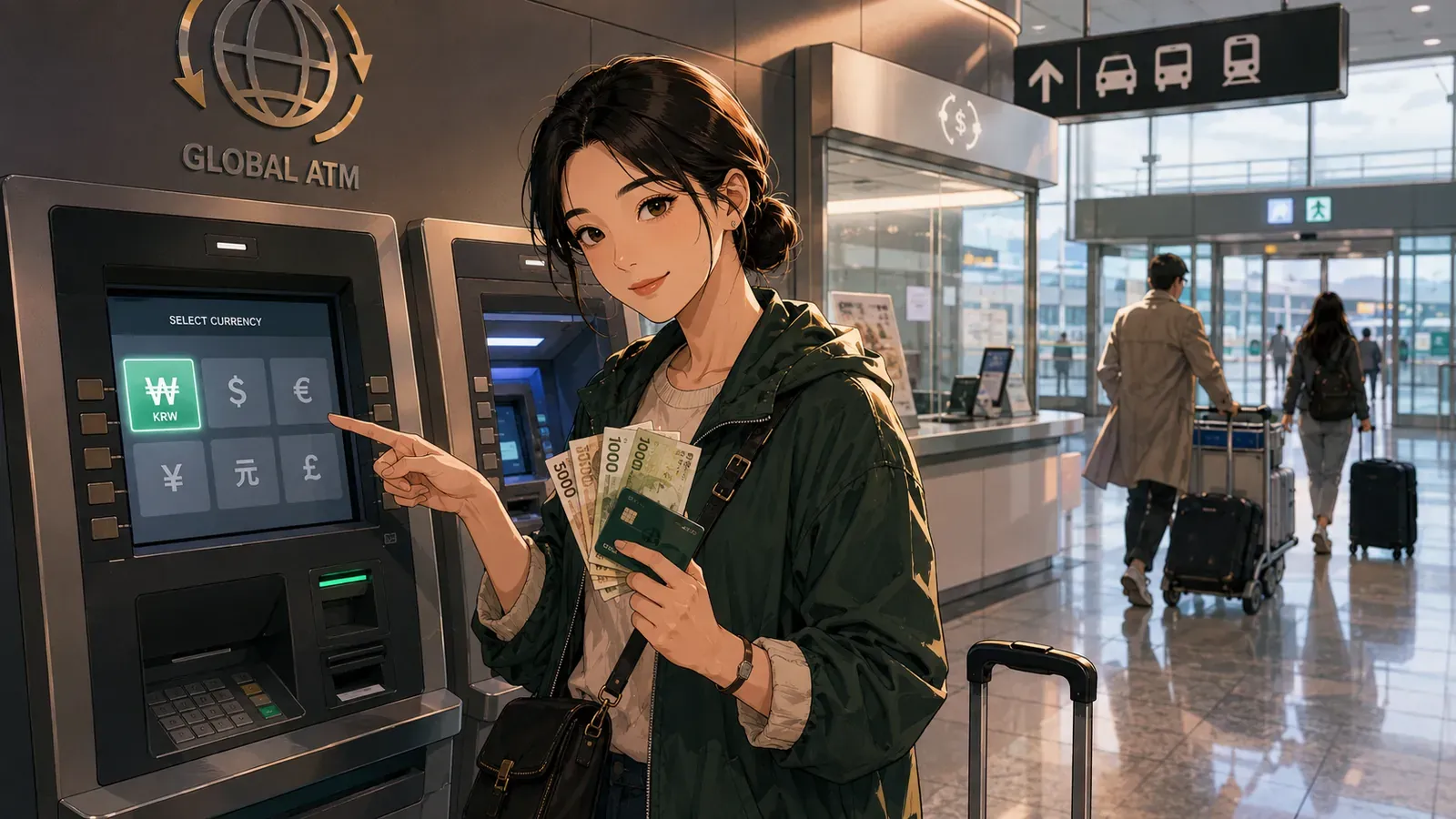
Cards work almost everywhere in Seoul — convenience stores, taxis, the subway, most street stalls. On a short trip you can get through most of it without cash, but keep some for traditional market stalls, old-school "cash only" restaurants, flea markets, and a few older coin machines. Carry ₩50,000–100,000 per person — enough to never hit zero. Withdraw won from a machine marked "Global ATM" (major banks — Shinhan, Woori, KB, Hana — or some convenience-store ATMs); decline home-currency conversion (DCC) and choose KRW; the fee runs about ₩3,000–3,500 per withdrawal, so take out more at once. Carry two cards on different networks, and bring the physical cards: Apple Pay works at participating merchants with contactless terminals — the major convenience-store chains and many big chains — but not at many smaller shops, and a Galaxy phone with a foreign-issued card has the same contactless limits. KakaoPay and Naver Pay generally need a Korean ID to set up.
When do you actually need cash in Seoul?
- Traditional market stalls — bindaetteok at Gwangjang, banchan at Mangwon (망원동) Market (망원시장). Many take cards, but some run a separate, lower "cash price." (Which market to actually go to.)
- Old-school restaurants — the gukbap or baekban place with "cash only" or "cards for ₩50,000 and up" posted on the wall.
- Flea markets and market homeware shops — somewhere like Dongmyo (동묘) is mostly cash.
- Some older unmanned machines — coin noraebang, claw machines, and arcades mostly take cards now, but an older machine here and there is still coins only.
How much cash should you carry?
₩50,000–100,000 per person is plenty. The goal isn't to carry a lot — it's to never be caught with zero. When it runs out, pull more from an ATM.
Where do you withdraw cash in Seoul?
Your foreign card won't work in just any ATM. Look for a machine marked "Global ATM" or "Global" — major banks (Shinhan, Woori, KB Kookmin, Hana) and some convenience-store ATMs. Common at the airport, in tourist areas, and in subway stations.
- Choose English, then the "Foreign card" / "Global" menu.
- If it asks whether to charge in your home currency (DCC), choose won (KRW). Home-currency conversion gives you a worse rate.
- Fees are usually ₩3,000–3,500 per withdrawal plus your own bank's charge. One larger withdrawal beats several small ones.
- Carry two cards on different networks (a Visa and a Mastercard). One card getting declined happens.
Can you use Apple Pay or Samsung Pay in Seoul?
- KakaoPay and Naver Pay — what Koreans use, but they generally need a Korean alien registration card to set up. Don't count on them as a visitor.
- Apple Pay works at participating merchants with contactless terminals — the major convenience-store chains (CU, GS25, 7-Eleven, Emart24) and many large chains such as coffee chains and department stores — but plenty of small shops and restaurants still don't have a compatible terminal. Look for the Apple Pay or contactless symbol, and keep the physical card as backup.
- Samsung Pay / Samsung Wallet — the version Koreans use with Korean-issued cards works on almost any terminal. A Galaxy phone set up abroad with a foreign card is a different story: don't expect that same coverage; treat it like Apple Pay (contactless terminals only) and carry the physical card.
- WOWPASS — a prepaid card for visitors. Load it with foreign cash (16 currencies) or a card at airport and city kiosks, tap it like a Korean card; it has a T-money transit chip built in.
- T-money — transit plus small convenience-store purchases. Top it up with cash at station machines or convenience stores. Since March 17, 2026, new ticket machines at some Seoul subway stations take foreign cards — but only to buy single-journey tickets and buy or charge the Climate Card (기후동행카드) short-term pass, not to top up an ordinary T-money card. Expect a service fee of around 3.7% on foreign-card payments.
The setup that works
- On arrival, pull ₩50,000–100,000 from a Global ATM at the airport (choose won, decline DCC).
- One transit card: T-money or WOWPASS.
- Everything else: a foreign card, plus a little cash. Always two cards.
Cards work almost everywhere in Seoul. Carry ₩50,000–100,000 per person for market stalls, old restaurants, and flea markets. Withdraw won from a "Global ATM" (major banks or some convenience-store ATMs); decline home-currency conversion (DCC); expect a ~₩3,000–3,500 fee per withdrawal. KakaoPay/Naver Pay usually need a Korean alien registration card. Apple Pay works at participating merchants with contactless terminals (major convenience-store chains and many big chains), not at many small shops; a Galaxy phone with a foreign-issued card has similar limits — carry the physical card. Since March 17, 2026, new machines at some Seoul subway stations accept foreign cards for single-journey tickets and the Climate Card short-term pass only — ordinary T-money top-ups still need cash. WOWPASS is a prepaid card (with a T-money chip) loadable with foreign cash or cards at kiosks. Fees and coverage change — check current terms.
 A Note From Daniel — our real human editor
Living here with a Korean card, I've found Samsung Pay accepted almost anywhere — nearly every terminal takes it, and it's convenient enough that I eventually switched from an iPhone to a Galaxy for it. Apple Pay is more hit-and-miss: convenience stores and big chains, yes, but many small places, no. A visitor's phone set up with a foreign card won't match what I get with a Korean one, so don't leave the physical card at the hotel.
 Soo's Tip
Withdraw once, at the airport, a bit more than feels necessary — the fee is per transaction, not per won. Keep an emergency ₩20,000 folded somewhere separate from your wallet. The day you need cash is usually the day the one ATM nearby won't take your card.