Seoul's Traditional Markets: Which One to Actually Go To
Gwangjang is on every itinerary and it's the most overrated of the four. Which Seoul market to visit for what — spectacle, actual eating, an activity, or one specific dish.

Partly personally verified — Daniel checked some of these in person
How we verify →·Last verified ·4 min read
Almost every Seoul itinerary has Gwangjang Market (광장시장) on it. That's exactly the problem.
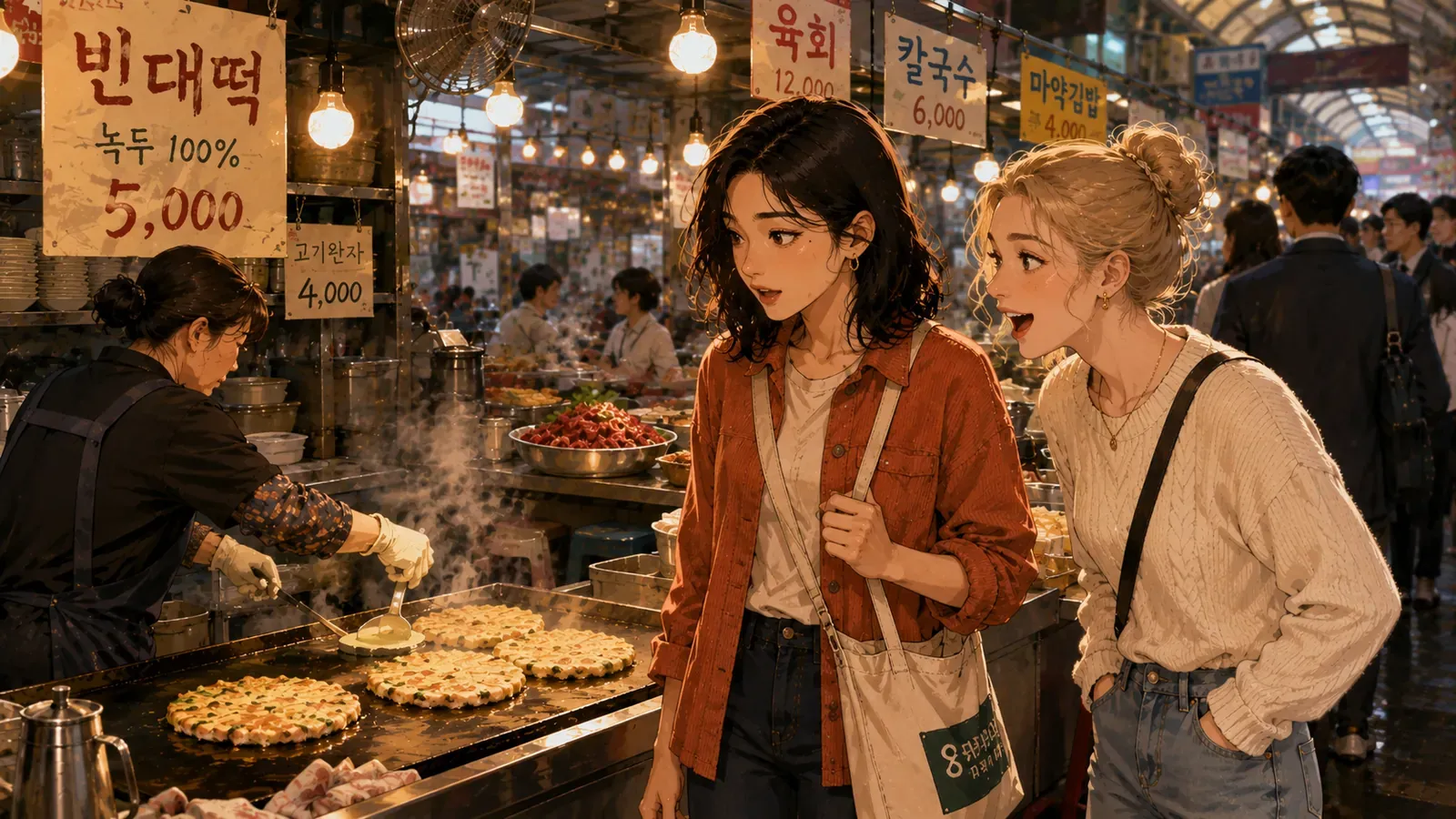
Gwangjang is worth seeing — a covered market over a century old, rows of griddles frying bindaetteok (mung bean pancakes), a yukhoe (beef tartare) alley, the famous "mayak" mini gimbap. But you can't do it the way the lists tell you to. As the crowds have grown, so have the complaints — overcharging, brusque service, the kind of thing that lands in the Korean news again every year. By evening the stalls have people standing three deep. If you go, go on a weekday morning, treat it as something to look at, and ask the price before you order. Keep your expectations for actually eating there low.
Each market has a different character, and which one suits you depends on what you're after.
Almost every itinerary puts Gwangjang on it — do it once, on a weekday morning (10–11am), for the look and the photos, ask the price before you order, and eat elsewhere; it's a century-old covered market and a real spectacle, but crowded and inconsistently priced. To actually eat, go to Mangwon (Line 6, exit 2, walkable from Hongdae/Yeonnam) — more variety, far cheaper, aimed at locals not tourists. Tongin is the one where you do something: ₩5,000 buys ten brass coins you trade at stalls for a build-your-own tray (lunchbox cafe closed Tuesdays and the third Sunday, weekdays ~11am–4pm). Namdaemun is only worth it with a target dish — Galchi Jorim Alley (braised hairtail). Carry cash; not every stall takes cards.
Gwangjang — once, early, to look. Unbeatable as spectacle: bindaetteok, nokdujeon, yukhoe, knife-cut noodles, rolled omelette. But it's crowded and pricing is inconsistent. Jongno (종로) 5-ga Station (Line 1), exit 8, three minutes' walk. Ten or eleven in the morning is the closest it gets to breathable. (The imported-vintage market on the second floor is a separate thing — see our vintage shopping guide.)
Mangwon (망원동) — the one to actually eat at. People put Gwangjang on the plan, but for food, Mangwon is better: more variety, far cheaper, and aimed at locals rather than tourists. Buy gochujang samgyeopsal, honey rice cakes, sweet-and-spicy fried chicken, or churros and eat as you walk. Mangwon Station (Line 6), exit 2. It's walkable from Hongdae (홍대) and Yeonnam (연남동), and it pairs well with the stretch of Han River (한강) park nearby.
Tongin — the fun one (the brass-coin lunchbox). At the market's "lunchbox cafe," ₩5,000 gets you ten brass coins. You carry them to participating stalls and trade them for banchan, jeon, and tteokbokki to build your own tray. Oil tteokbokki is the local specialty. It works well with a walk through Seochon (서촌) or a day with kids. The lunchbox cafe is closed Tuesdays and the third Sunday of each month; weekdays roughly 11am–4pm (coins sold until 3pm).
Namdaemun — go for one dish. Approached as a "market experience," it's just big and hectic. Approached for Galchi Jorim Alley — braised hairtail — it's a different trip: one bubbling pot with rice and side dishes, from an alley that's known for exactly that. There are also hotteok, twisted doughnut, and kalguksu alleys, plus the tableware wholesale arcades on the upper floors of Daedo Mall. Hoehyeon Station (Line 4), exit 5. Many shops close Sundays.
Noryangjin (노량진) — the one where you choose the fish. It's a wholesale fish market rather than a snack market: you buy seafood downstairs, have it cooked upstairs, and the bill has more parts than it first looks. Here's how the buy-then-eat system works.
What this means if you're visiting
- If you only do one market to eat at, make it Mangwon. You'll spend little, the choice is wide, and it isn't staged for visitors.
- Do Gwangjang once, for the photos and the look of it. Eat elsewhere.
- Tongin is the one where you do something — the brass-coin lunchbox is a good activity with kids or a group.
- Skip Namdaemun unless you want the galchi jorim. Go in with a target.
- Carry cash (more stalls take cards now, but not all), and keep your bag in front of you at peak times.
 A Note From Daniel — our real human editor
Korean travel guidebooks always seem to land on Gwangjang, but Koreans themselves barely go. The one I'd actually point you to is Tongin — partly for the market, partly because the walk around it is so good: you can carry on past Gyeongbokgung (경복궁) to Gwanghwamun and into Insadong (인사동) without any kind of plan.
Gwangjang: Jongno 5-ga Station (Line 1) exit 8; food stalls roughly 9am–11pm, calmest before noon; cash preferred. Mangwon: Mangwon Station (Line 6) exit 2; street food roughly 10am–10pm. Tongin: Gyeongbokgung Station (Line 3) exit 2, then a short walk; lunchbox cafe closed Tuesdays and the third Sunday monthly, weekdays ~11am–4pm. Namdaemun: Hoehyeon Station (Line 4) exit 5; many shops closed Sunday. Hours and stall days shift — confirm anything you're building a day around.
 Mina's Tip
At Gwangjang, the vendors calling out to you in English and waving a laminated photo menu are the ones to walk past — that's the setup that gets built for tourists, not by anyone who eats there. Look for the stalls with a line of office workers and no English sign. And don't fill up at the first griddle you see; the bindaetteok is the thing to actually sit down for, so pace yourself to it.