Insaeng Netcut: The Unmanned Photo Booths on Every Block, Explained
The bright glass booths on every Seoul block: how to use one, what it costs (~₩5,000), the brand differences, and the small things that trip first-timers up.

Partly personally verified — Daniel checked some of these in person
How we verify →·Last verified ·5 min read
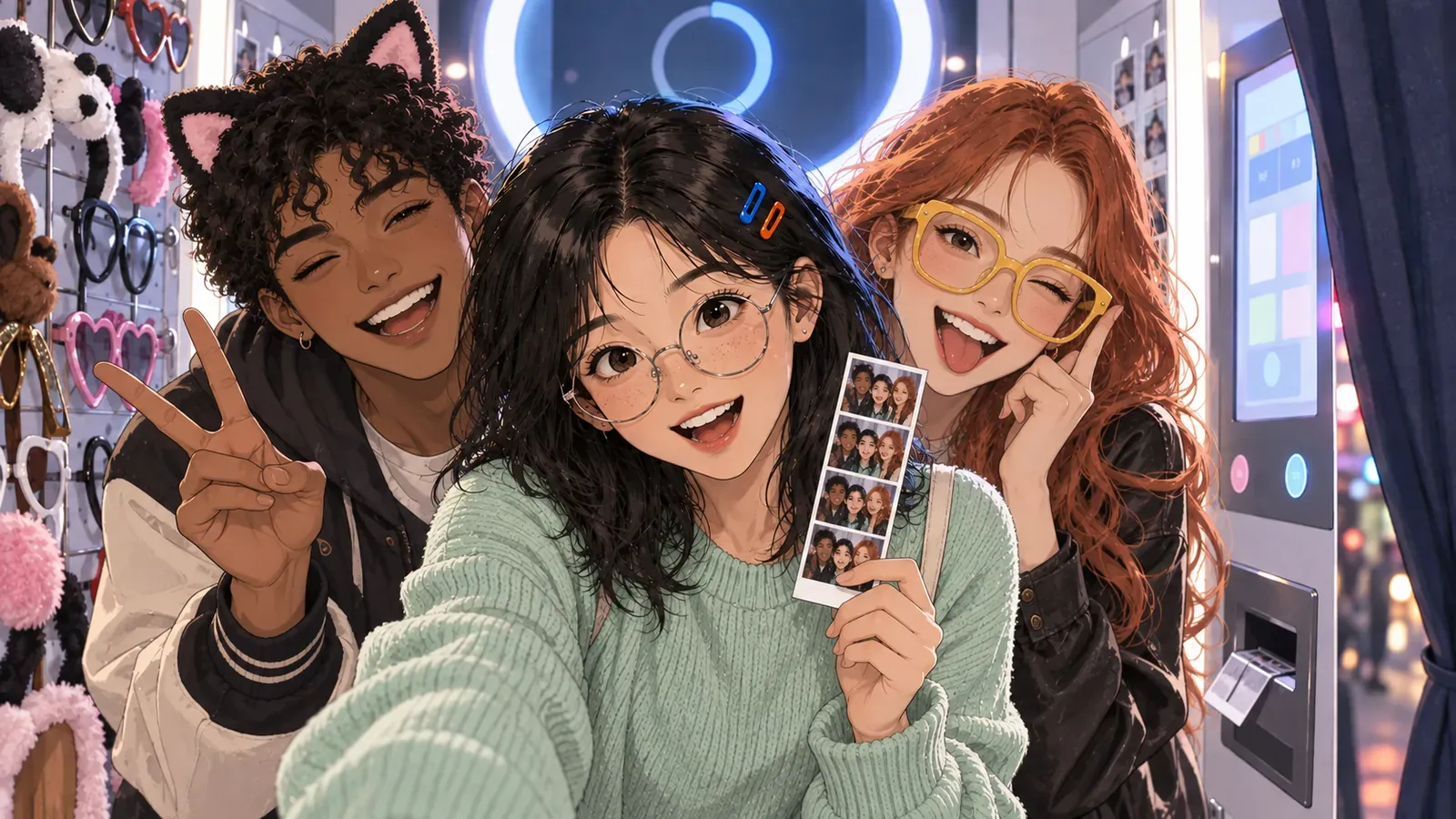
Walk around Seoul and you keep passing bright glass booths. There's a camera inside, and people step in and out without a reservation. These are self photo studios, and here they're just part of the day — you eat dinner, do noraebang, take four photos, go home.
There are several brand names, but the catch-all term is insaeng netcut ("life four cuts"). The first brand, which started in Daegu (대구) in 2017, gave its name to the whole format. There are now around 1,000 self-photo booths in Korea, and it's a US$400 million industry.
- How it works: unmanned, many are 24-hour. Pay → choose a frame → pose (there's a countdown) → printed in under a minute. You also get a QR code for the digital files. Props (glasses, hats) are on a wall next to the booth.
- Price: a standard four-cut is roughly ₩4,000–6,000; idol, seasonal, or premium frames add ₩1,000–3,000, so figure on ₩5,000–8,000 for a session. Photoism runs a little higher (around ₩7,000).
- Brands: Life Four Cuts (인생네컷, the most locations), Photoism (idol frames), Haru Film (a softer retouched look), Photogray and others — the colour and filters differ slightly.
- Where: Hongdae (홍대) is the easiest — booths cluster near Hongik University Station (홍대입구역). Seongsu (성수) and Myeongdong (명동) have plenty too.
- This is not the hanbok photo studio or the body-profile studio — those are staffed, booked ahead, and expensive.
Why are there so many of these?
Insaeng netcut started with one Daegu brand in 2017 and exploded among Gen Z through the pandemic. The reasons are simple: it's cheap (well under ₩10,000), fast (one to two minutes), the result is physical, and it works in a group. You don't just get a digital photo — you get a paper strip you can put in a wallet, slide into a phone case, or stick on a wall.
The biggest driver of repeat visits is the idol frame. Brands keep releasing limited frames that drop a celebrity image into one of the four panels, so a fan can print a strip that looks like they posed next to their favourite artist. Photoism has run frame campaigns with BTS, Stray Kids, and a long list of other K-pop acts. Seasonal frames (Christmas, cherry blossom) do the same job.
How do you use one?
- Go in, choose the number of people, and pay (most take card or mobile pay; some are cash).
- Pick a frame — colour (white or black), number of cuts, and any idol or seasonal frame that's available.
- Stand in front of the screen and a countdown runs. You usually take six to eight shots and then choose four.
- A screen lets you nudge the brightness and retouch level (this varies by brand).
- Two strips print within a minute. Scan the QR code for the digital files (some places include a short video).
There's a prop wall next to the booth — glasses, hats, headbands, small plush toys. Use whatever you want.
Which one do you go to?
| Brand | Register | Price (2 people, 4 cuts, 1 print) | Notes |
|---|---|---|---|
| Life Four Cuts (인생네컷) | Classic, most locations | ~₩4,000–6,000 | Everywhere, neutral filters |
| Photoism | Fandom, idol frames | ~₩6,000–8,000 | Celebrity collabs, self-lighting |
| Haru Film (하루필름) | Retouched, film look | ~₩5,000–7,000 | Soft tones, popular with twentysomethings |
| Photogray / Photo Signature | Varied tones and frames | Similar | Slightly different colour on each |
Prices and frames change by location and season. Confirm at the booth.
Hongdae is the easiest place to try it. Hongik University Station, the main street, the cafés, the K-pop goods shops, and Olive Young are all close together, so you're walking past the booths anyway. It's common to find several brands side by side on one block.
 A Note From Daniel — our real human editor
You don't need to be in Seongsu, Hongdae, or Myeongdong — any moderately busy area has an unmanned booth, and there are usually several inside the big shopping malls. It doesn't take long or cost much, and you come away with a small printed keepsake of the day. I do it once in a while when I'm out with family or friends on a weekend.
Things worth knowing
- You can do it alone. There's a single-person rate and nobody thinks it's odd — the self-lighting is good, so people come solo just for a profile photo.
- Two strips print. The default is one each for you and whoever you came with.
- The digital files expire. Some QR links lapse after a few days, so save them that day.
- The filters are strong. Skin retouching is heavy by default on a lot of brands; you can usually turn it down on the adjustment screen.
- There can be a queue. Friday and Saturday nights, the popular booths in Hongdae and Seongsu back up. Weekday afternoons are quiet.
 Rae's Tip
This isn't a grand "you have to do this in Seoul" experience. It's just the thing people here do whenever they meet up, and you're left with two ₩10,000 strips of paper. But when you're home and you look at the one stuck on your fridge, that day comes back sharper than it does from the other photos. 📷
Korean self photo studios ("insaeng netcut," after the brand Life Four Cuts, which started in Daegu in 2017) are unmanned booths — around 1,000 in Korea, a US$400M industry. Pay, choose a frame, pose to a countdown, and a strip prints in under a minute; you also get a QR code for the digital files. A standard four-cut is roughly ₩4,000–6,000, with idol, seasonal, or premium frames adding ₩1,000–3,000 — figure on ₩5,000–8,000 a session. Main brands: Life Four Cuts (most locations), Photoism (idol frames — collabs with BTS, Stray Kids and others), Haru Film (softer retouched look). Hongdae, near Hongik University Station, is the easiest place to try one. Filters are strong by default but adjustable; the digital-file QR links can expire in a few days, so save them the same day.