The Etiquette That Actually Matters in Seoul (and What Nobody Cares About)
The real list is short: two hands, drink-pouring, priority seats, shoes off, don't stand chopsticks in rice. Tipping and table manners are things foreigners overthink.

Partly personally verified — Daniel checked some of these in person
How we verify →·Last verified ·5 min read
Search for Korean etiquette and you get a long list of things not to do. In practice there are only a few that matter, and nobody minds whether a foreigner gets the rest right. What to mind and what to let go of is the whole of this piece.
Only a handful of things actually matter. Give and receive with two hands from anyone older or senior — money, a card, a drink. Don't pour your own drink — people pour for each other. Wait for the oldest person to start eating at a shared meal. Leave the subway priority seats empty even when free. Take your shoes off where there's a shoe cabinet at the entrance. Never stand a spoon or chopsticks upright in rice (it's the shape used in ancestral rites). Keep calls quiet on public transport. What foreigners overthink and nobody minds: tipping (not done anywhere — restaurants, taxis, hotels), general table manners (loose), honorifics and titles (not expected of a foreigner, and irrelevant in English). Effort counts more than precision, and every norm is looser among friends or anywhere casual.
What actually matters
- Two hands. When you give or receive something from someone older or more senior — money, a card, a drink, a gift — use both. If one hand isn't free, rest your left hand lightly on your right forearm. If you remember one thing, make it this.
- Drinks. You don't pour your own — people pour for each other. Hold the bottle with both hands when you pour for someone older; receive with both hands when they pour for you, and turn your head slightly away for the first sip.
- The order at a shared meal. You start after the oldest person has picked up their spoon or chopsticks. Eating alone, this doesn't apply.
- The priority seats on the subway. The seats at each end of the car stay empty even when they're free — even when the regular seats are full. Same with the pregnancy seat.
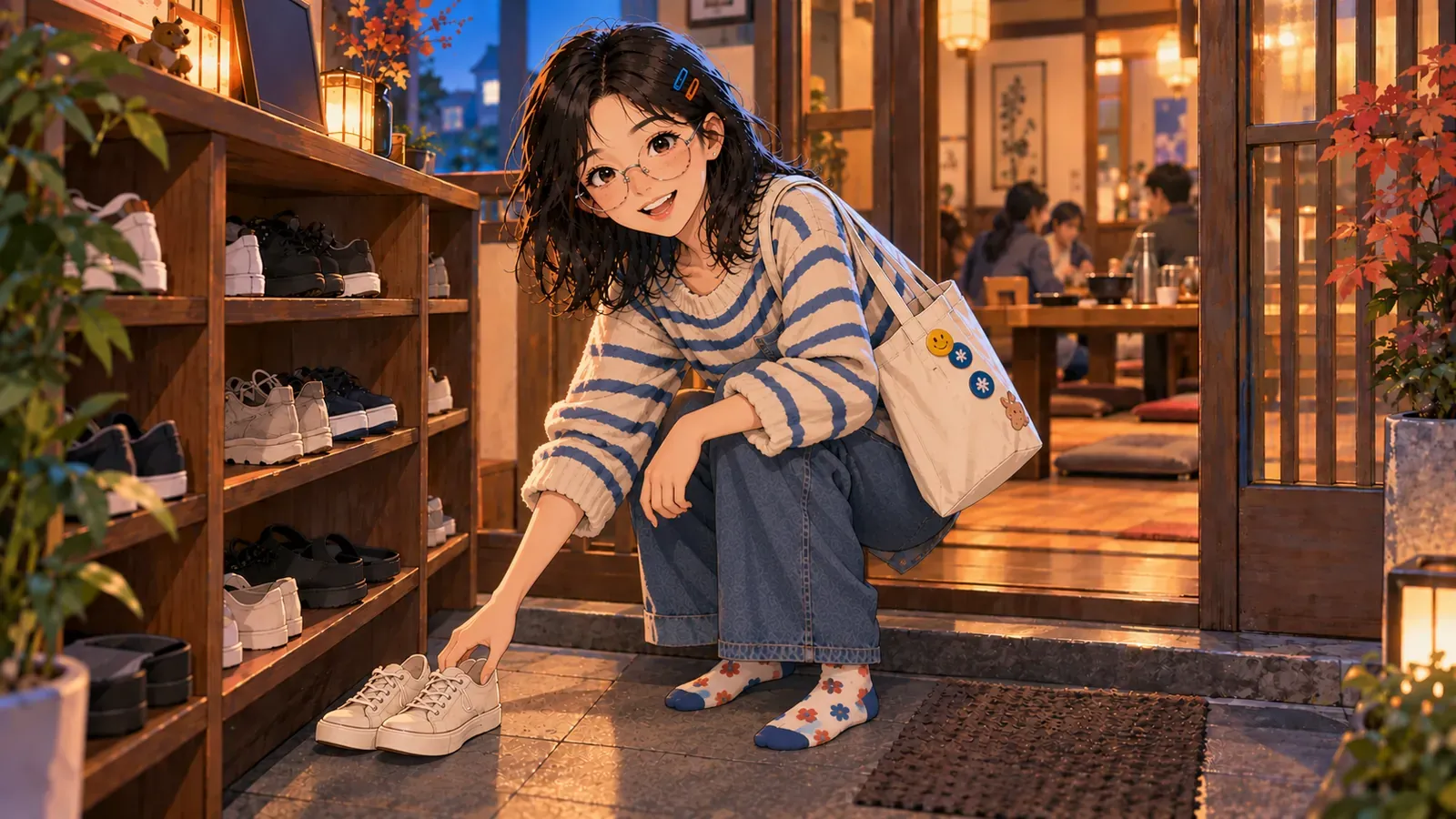
- Shoes indoors. Guesthouses, hanok, some floor-seating restaurants, jjimjilbang. If a restaurant has a shoe cabinet at the entrance, take your shoes off. Keep track of where you put them (see Daniel's note below).
- Not standing a spoon or chopsticks up in a bowl of rice. Upright in the rice is the shape used in ancestral rites, so it reads as ominous.
- Loud calls and speakerphone. On the subway, on the bus, in a cafe — you'll get looks.
What nobody cares about (the things foreigners overthink)
- Tipping. It isn't done — restaurants, taxis, hotels. Leave money on the table and a server may chase you down thinking you forgot your change. Service here runs on pride, not gratuity.
- Table manners generally. Beyond the chopsticks-in-rice thing, they're loose — see the general table rules for the rest. Lift the bowl or don't, make noise or don't — no one's watching the way they might in Japan.
- Titles and honorifics. No one expects a stranger, and a foreign one, to get the polite forms right. If the conversation's in English it doesn't come up at all.
- Most "rude mistakes." The effort to try is what registers. Give and receive with two hands, leave the priority seats alone, don't tip — that's most of it.
One more thing
These norms shift with generation and setting too. They're sharper in a formal situation or across a big age gap, and much looser among friends or anywhere casual. Nobody expects you to have memorized all of it before you arrived. If etiquette isn't your worry and you just want the small, fun differences, see 10 things that surprise first-time visitors to Seoul instead.
 A Note From Daniel — our real human editor
The shoe thing is the one that catches guests out most. There are fewer floor-seating restaurants than there used to be, but plenty remain, and the tell is the shoe cabinet by the door. Don't set your shoes down next to a very similar-looking pair — later in the evening, someone a few drinks in can put yours on by mistake and leave, and it does happen. The restaurant can't help you find them afterward; that part's on you.
Worth minding: give and receive with two hands from anyone older or senior; don't pour your own drink; wait for the oldest person to start eating; leave the subway priority seats empty even when free; take shoes off where there's a shoe cabinet; never stand a spoon or chopsticks upright in rice; keep calls quiet on public transport. Don't overthink: tipping (not done, anywhere), general table manners (loose), honorifics (not expected of a foreigner). Effort counts more than precision, and the norms are looser in casual settings.
 Rae's Tip
If you're eating with Korean friends and lose track of the drink-pouring choreography, just watch for an empty glass near you and fill it — that one move covers most of it, and it's the part people actually notice. Nobody's keeping score on the rest.