Is a Templestay Worth a Night of Your Seoul Trip?
Wake at 4am, hand over your phone, eat in silence. Seven Seoul temples run English programs — the two formats, what you actually do, and who it's for.

Partly personally verified — Daniel checked some of these in person
How we verify →·Last verified ·6 min read
A templestay sounds like a tourist product, but it's closer to the opposite. You wake at 3 or 4am, hand over your phone, eat in silence, and wash your own bowl. It gets sold with the word "healing," and it's actually a fairly disciplined night.
Which is exactly why, for the right person, it becomes the most memorable night of a Seoul trip.
- Seven temples in Seoul run English programs: Bongeunsa, Geumseonsa, Hwagyesa, the International Seon Center, Jingwansa, Jogyesa, Myogaksa.
- Two formats: a day program (meditation, lotus-lantern making, tea, a temple meal — about ₩30,000–50,000) or an overnight (about ₩60,000–120,000).
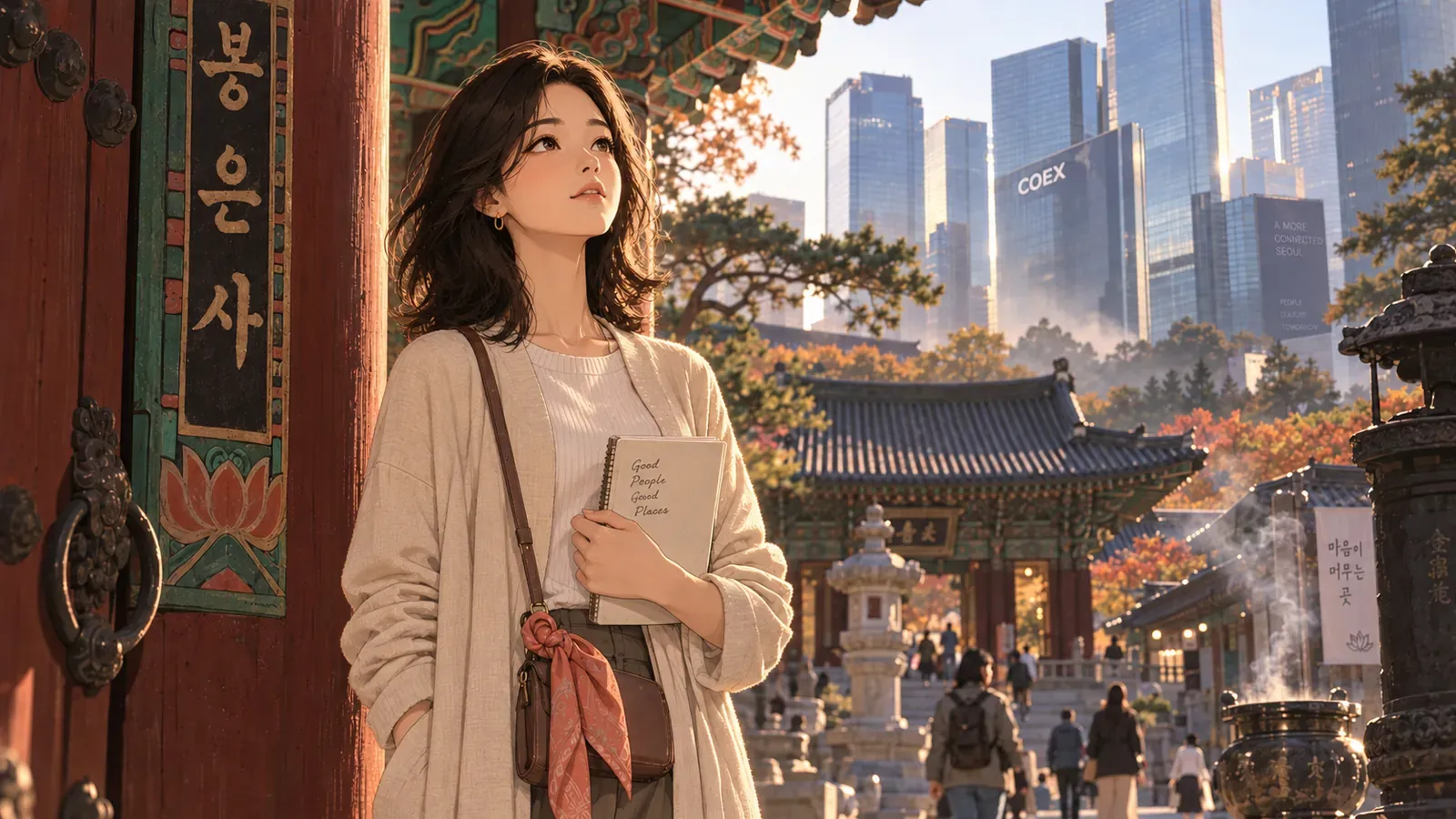
- Bongeunsa's English program: the first weekend of each month, Sat 2pm to Sun 11am, about ₩120,000. Next to COEX in Gangnam, so access is easy.
- Jingwansa: world-famous for its temple food (eating vegetarian or vegan in Seoul). On the edge of Bukhansan.
- Book: eng.templestay.com, at least a month ahead. Popular temples fill faster.
- Who it's for: anyone who wants one day on a completely different rhythm mid-trip. You go to spend the time differently, not to rest.
What does a templestay actually involve?
Programs differ, but the common elements are:
- Cham-Seon — seated meditation. A monk usually sets your posture and breathing.
- Baru gongyang — you're served in a set way, eat in silence, leave nothing, and wash your own bowls. The food is temple cuisine (no meat, fish, dairy, onion, or garlic).
- 108 prostrations or bell-striking — a physical practice.
- Da-Seon — a tea meditation.
- Sutra copying — tracing scripture by hand (in gold ink at some temples).
- A conversation with a monk — tea and questions. It doesn't have to be religious; the monks are used to travelers' questions.
- On an overnight, you join the pre-dawn service (around 3–4am) and go to bed early.
Phones are usually handed in on arrival, or you're asked not to use them.
Which temple should you go to?
| Temple | Location | Character | Note |
|---|---|---|---|
| Bongeunsa | Gangnam, next to COEX | A large temple in the middle of the city; easiest access | English program is the first weekend of each month, overnight, about ₩120,000 |
| Jingwansa | Edge of Bukhansan | World-famous for its temple food | In nature, about 40 minutes from central Seoul |
| Jogyesa | Jongno, next to Insadong | Head temple of the Jogye Order; very central | Popular — fills fast |
| Myogaksa | Jongno, on Naksan hill | Central but up a hill, with a Seoul view | — |
| Geumseonsa | Bukhansan | In the mountains, quiet | — |
| Hwagyesa | Bukhansan, Gangbuk | An international-seon tradition | Used to foreign practitioners |
| International Seon Center | Yangcheon-gu | A large modern facility | Groups, a range of programs |
Fees and schedules vary by temple and season. Check eng.templestay.com.
If it's your first time and you don't want to leave the city, Bongeunsa or Jogyesa. If you want it in nature, Jingwansa or Geumseonsa. If temple food is the point, Jingwansa.
How do you book?
- English bookings go through eng.templestay.com.
- Book at least a month ahead. Spring and autumn weekends fill faster.
- You choose a format (day / overnight), a date, and a temple.
- Payment is usually online; some temples also take cash on arrival.
- Bring: comfortable clothes (temple robes are usually provided), toiletries, and warm layers (mountain temples are cold at night). Skip perfume and heavy makeup.
Day program or overnight — which one?
- The day program (Templelife) — half a day. Meditation, lotus-lantern making, tea, one temple meal. Choose this to sample a temple's day without reshaping your Seoul itinerary. About ₩30,000–50,000.
- The overnight — you go through the whole rhythm: pre-dawn service, baru gongyang, an early night. A night without your phone. This is the version you can say you "did a templestay" about. About ₩60,000–120,000.
If your time is tight, the day program is still worth doing. If you want the real rhythm, stay the night.
 A Note From Daniel — our real human editor
Bongeunsa sits right next to COEX — close enough that it's basically one crosswalk away. Even if you skip the templestay program, it's worth walking the temple grounds for a few minutes just for the atmosphere. And since COEX is one street over, you can pair a quiet temple visit with a completely different, busy mall scene in the same afternoon — a fun contrast for a day out.
 Mina's Tip
A templestay isn't a way to rest — waking before dawn, doing prostrations, and eating in silence is not resting. It's for the person who wants to cut the rhythm of a city trip completely for one day. For that person it stays sharper than any other night in Seoul; for anyone else it's an uncomfortable night. If you're not sure, start with the day program.
Seven temples in Seoul run English-language templestay programs: Bongeunsa (Gangnam, next to COEX), Jingwansa (Bukhansan, famous for temple food), Jogyesa (central, Jongno), Myogaksa, Geumseonsa, Hwagyesa, and the International Seon Center. A day program (meditation, lotus-lantern making, tea, a temple meal) runs about ₩30,000–50,000; an overnight runs about ₩60,000–120,000. Bongeunsa's English program is the first weekend of each month, Saturday 2pm to Sunday 11am, about ₩120,000. Book through eng.templestay.com at least a month ahead — popular temples fill faster, especially spring and autumn weekends. Expect seated meditation, baru gongyang (a set, silent meal you eat fully and wash up after), sutra copying, a monk conversation, and on an overnight a pre-dawn service. Phones are usually handed in. Fees and schedules vary — confirm on the official site.