Fine-Line Tattoos in Seoul: Where to Go, What Changed in 2026
Getting a tattoo in Korea just went from a legal gray area to actually legal — what changed, where Seoul's fine-line studios cluster, and how booking actually works.

Research-verified — cross-checked against independent sources
How we verify →·Last verified ·4 min read
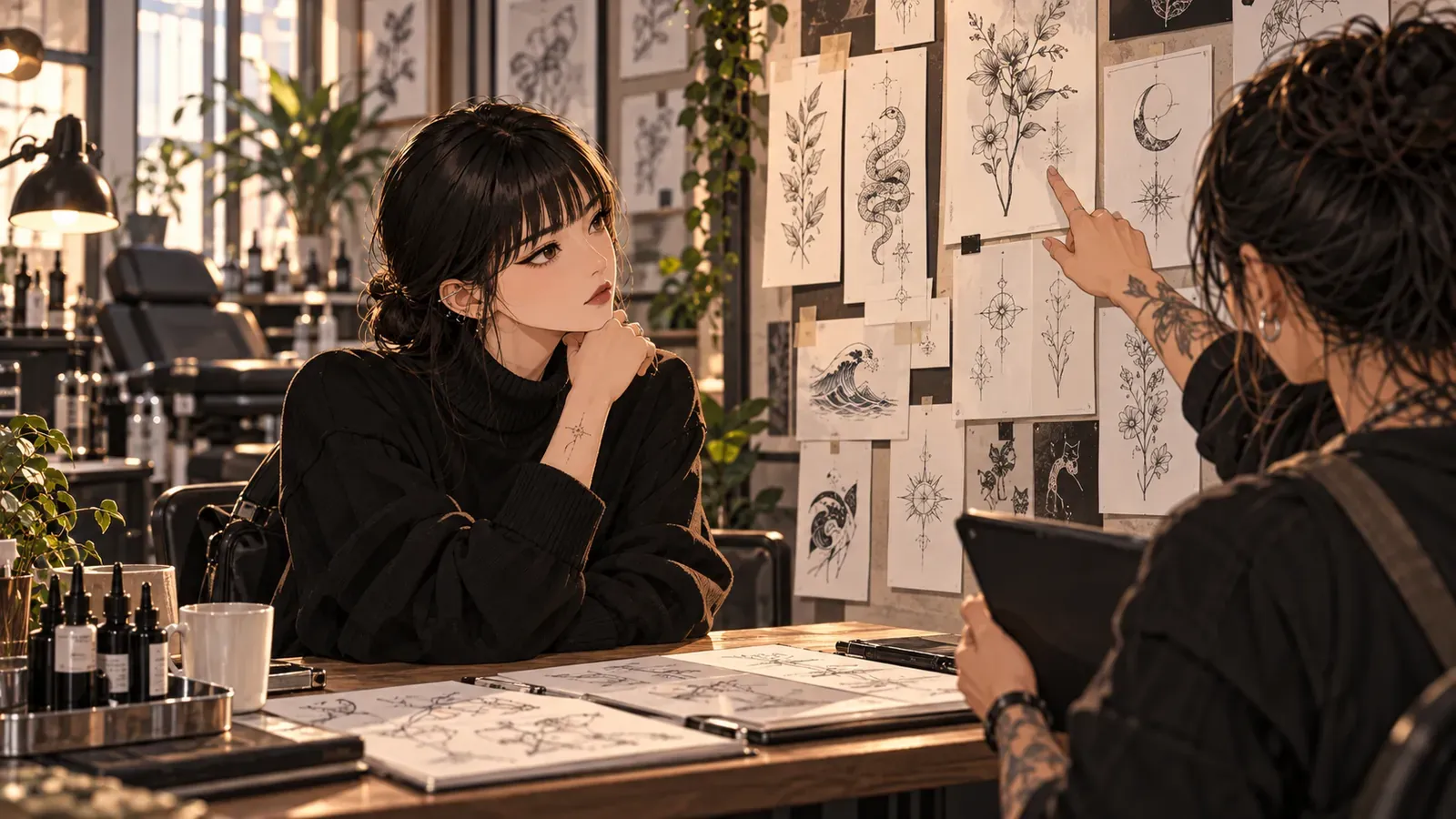
Getting a tattoo in Korea just went from a decades-long legal gray area to something the Supreme Court has actually ruled on. Here's what changed, and how booking actually works.
September 2025: The National Assembly passed the Tattooist Act, legalizing non-medical tattooing as a recognized profession (195 votes in favor). May 21, 2026: The Supreme Court's full bench went further, overturning its own 34-year-old 1992 precedent — ordinary cosmetic tattooing by a non-medical practitioner is no longer treated as unlicensed medical practice. As of now, getting tattooed in Seoul isn't a legal risk for you. The formal licensing system isn't live yet — it takes effect October 29, 2027. Until then, hygiene standards vary by studio; ask about single-use needles and fresh gloves. Booking runs almost entirely through Instagram DM. Walk-ins are rare. Fine-line and minimalist studios cluster in Hongdae and Hapjeong. Prices run roughly ₩50,000+ for something small, ₩150,000–200,000 for a palm-sized piece.
Is getting a tattoo in Korea actually legal now?
For decades, a 1992 Supreme Court precedent treated tattooing as a medical act — legally, only a licensed doctor could do it, even though tens of thousands of studios operated anyway in a widely tolerated gray area. That changed in two steps. On September 25, 2025, the National Assembly passed the Tattooist Act 195-to-0 (with 7 abstentions, out of 202 members present), formally recognizing non-medical tattooing as a profession. Then on May 21, 2026, the Supreme Court's full bench (전원합의체) overturned its own 1992 precedent, ruling that ordinary cosmetic tattooing by a non-medical practitioner doesn't by itself constitute unlicensed medical practice. Practically, that means as of today, walking into a Seoul studio and getting tattooed isn't the legally murky act it used to be.
So is everything regulated now?
Not yet. The Tattooist Act's actual licensing and registration system — the part that would mandate hygiene training and official certification — doesn't take effect until October 29, 2027. Right now is a transition window: studios aren't yet required to meet a uniform standard. It's worth asking directly before you book whether they use single-use needles and change gloves between clients — a normal question at any studio worth going to.
How do you actually book?
Almost every studio runs bookings through Instagram DM rather than a phone line or walk-in counter. You message with your idea (or a reference image), the artist quotes a rough price and size, and you go from there — a few days' lead time is typical. A handful of Hongdae studios do take walk-ins, but don't plan around that. English proficiency varies by artist, so check whether a studio's profile mentions English support before messaging.
Where do fine-line and minimalist studios cluster?
Hongdae and the adjacent Hapjeong area have the heaviest concentration of studios working in fine-line and minimalist styles. Naming a single "best" studio here isn't reliable — small studios and solo artists open, close, and shift specialties quickly, and the more useful move is searching Hongdae-area tattoo hashtags on Instagram and judging by an artist's most recent posted work, not their follower count or a years-old blog recommendation.
What should you budget?
Prices aren't standardized and quotes mix currencies across sources, but the rough range holds: something finger-joint-sized often starts around ₩50,000, while a palm-sized piece more commonly lands in the ₩150,000–200,000 range. Treat any number here as a starting point for a DM conversation, not a fixed price.
What about jjimjilbangs and saunas afterward?
Attitudes toward tattoos in Korea have loosened considerably as they've become mainstream — the most recent survey data found roughly 3 in 10 Korean adults had at least one tattoo (up from about 1 in 4 a few years earlier), and the share is almost certainly higher now given that trend. Larger, more casual jjimjilbangs are generally relaxed about it. Some upscale facilities, particularly in Gangnam, still post discretionary signage restricting "excessive" visible tattoos, so if you're not sure, ask at the front desk before you pay rather than after — our jjimjilbang primer covers the rest of the etiquette.
What this means if you're getting a tattoo in Seoul
- Legally, you're in the clear. The May 2026 Supreme Court ruling means ordinary tattooing is no longer treated as unlicensed medical practice.
- Hygiene is still on you to check. The formal certification system doesn't start until October 2027 — ask about single-use needles before you book.
- Expect to book by Instagram DM, not a walk-in counter. A few days' lead time is normal.
- Look in Hongdae and Hapjeong, and judge by recent posted work, not a studio's name recognition alone.
- Ask at the front desk before a sauna trip if you're worried — most places are fine, a few upscale ones aren't guaranteed to be.
 Yuna's Tip
Don't book off a studio's follower count — book off how recent their posted work is. A page that hasn't posted in months tells you nothing about who's actually doing the tattooing today; a feed updated within the last few weeks is the real signal.
Korea's Tattooist Act passed the National Assembly on September 25, 2025 (195 in favor, 7 abstentions, of 202 present), legalizing non-medical tattooing as a recognized profession. On May 21, 2026, the Supreme Court's full bench overturned its 1992 precedent, ruling that ordinary cosmetic tattooing by non-medical practitioners does not by itself constitute unlicensed medical practice — as of September 2026, this is no longer a legal gray area for travelers. The Act's formal licensing/registration system (hygiene training, official certification) doesn't take effect until October 29, 2027 — hygiene standards vary by studio until then; ask about single-use needles and fresh gloves before booking. Booking runs almost entirely through Instagram DM; walk-ins are rare. Fine-line/minimalist studios cluster in Hongdae and Hapjeong (Mapo-gu). Prices: roughly ₩50,000+ for a small design, ₩150,000–200,000 for a palm-sized piece. Jjimjilbang/sauna attitudes have relaxed significantly, though some upscale facilities (particularly in Gangnam) still post discretionary "excessive tattoo" entry restrictions.