The Best Time to Visit Seoul, Month by Month
Late September–October first, April–May second — and both are when it's most crowded and priciest. The real trade-offs: blossoms and foliage vs crowds, the monsoon, the heat, and the yellow dust.

Partly personally verified — Daniel checked some of these in person
How we verify →·Last verified ·5 min read
In this guide4
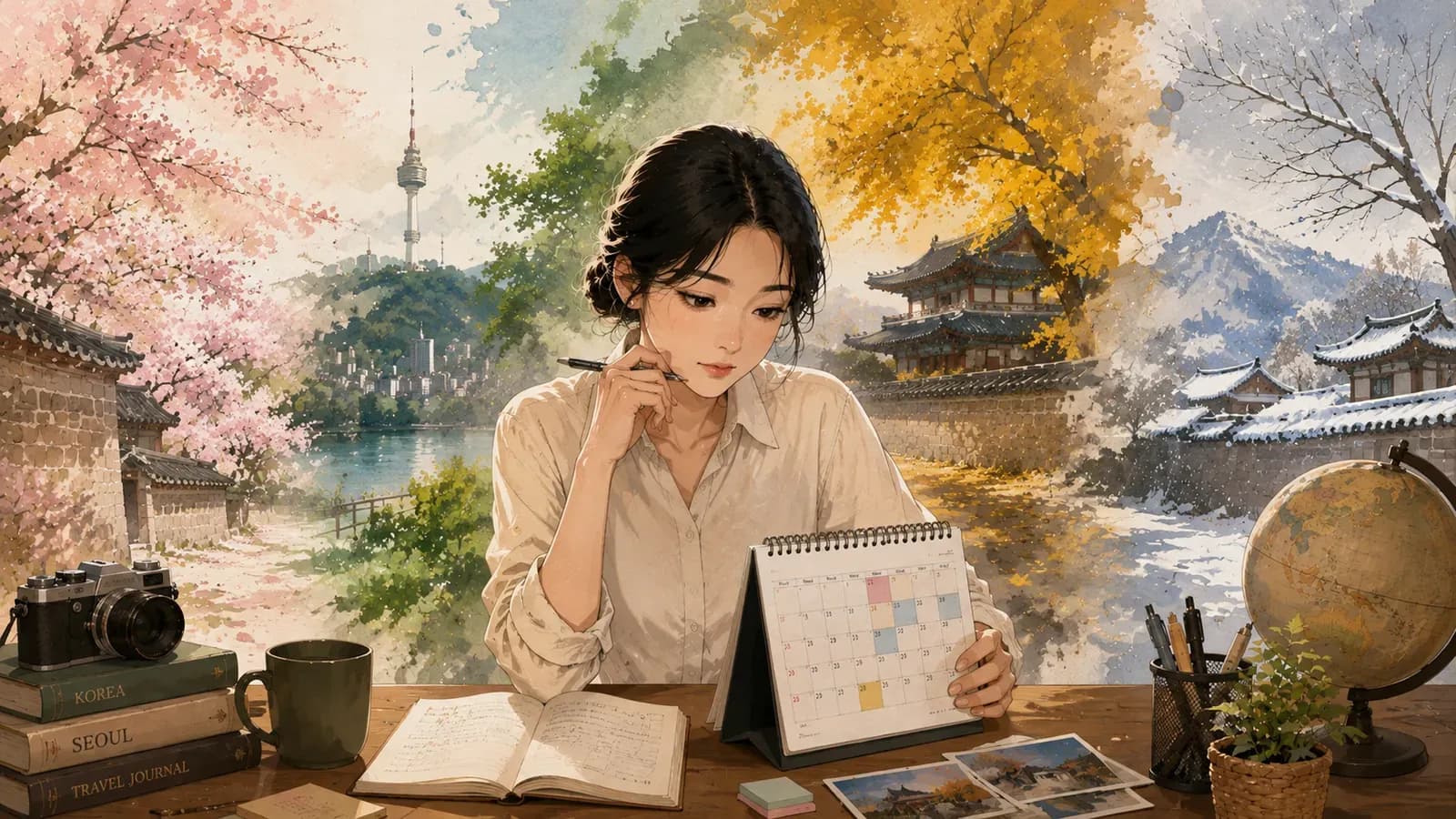
Seoul has a real four-season climate, and the month you pick decides what kind of trip you get — foliage or blossoms, queues or empty streets, cheap flights or peak fares.
Late September–October (autumn) is the first choice, April–May (spring) the second — clear skies and foliage, or cherry blossoms and mild temperatures. Both are also the most crowded and most expensive windows, so book accommodation early. October is the single most-recommended month; Seoul foliage peaks mid-October to early November. Cherry blossoms peak late March to early April. July–August is hot (30–35°C), humid, and includes the monsoon (~late June–late July), but flights and hotels are cheapest. December–February is cold (−5 to 5°C), dry, least crowded, and cheap. Avoid the days around Seollal (Lunar New Year) and Chuseok — many restaurants close and transport sells out; both dates move each year.
What is each season in Seoul actually like?
Spring (March–May) — 5–20°C, cherry blossoms, mostly clear. Blossoms usually peak late March to early April, shifting a week or two each year (watch the bloom forecast). The catch is yellow dust and fine particulates — March to May is the worst air of the year, with clear days and hazy days alternating on a scale of days. Bring a mask and an air-quality app (AirKorea).
Summer (June–August) — highs often 30–35°C and humid. The monsoon runs roughly late June to late July, with days of all-day rain and the occasional typhoon. August is post-monsoon heat. In exchange, flights and hotels are cheap and sights are quieter. Summer's payoff is being on the water — Han River (한강) pools, the Banpo (반포) fountain show (→ the Han River, the way Seoul uses it). Indoors — museums, department stores, jjimjilbang, cafes — is aggressively air-conditioned. Or write off an afternoon entirely and watch something Korean back at the hotel.
 A Note From Daniel — our real human editor
Korea genuinely used to have four even seasons; spring and autumn are both getting shorter and the summers have got hotter — climate change, presumably. If your trip lands anywhere from late June through August, come prepared for real heat. It isn't just the temperature, it's the humidity on top of it, and it doesn't let up at night — the tropical nights are rough. Plan the outdoor parts of the day around early morning and after dark, rather than counting on the evening to cool things off.
Autumn (September–November) — 10–20°C, foliage, clear skies. October is widely called the single best month. Seoul's foliage peaks mid-October to early November. It's peak season alongside spring, so book accommodation early. Palace night openings cluster in this window (→ is a palace visit worth it). Where to go and when: autumn leaves in Seoul and foliage day trips from Seoul.
Winter (December–February) — -5 to 5°C, snow, dry. Seoul's winter is cold but not humid, so it's bearable, and it's the least crowded and cheapest stretch. Snow on a palace or on Bukchon (북촌) photographs well. Mid-January to early February is the coldest. Around Seollal (Lunar New Year — a 3-day holiday that falls late January to mid-February) many shops and restaurants close, so check the dates.
Month by month
| Month | Weather | Crowds & cost | What defines it |
|---|---|---|---|
| January | Cold, dry (−5–5°C); coldest mid-Jan–early Feb | Lowest / cheapest | Quiet. Check Seollal dates. |
| February | Cold, easing late in the month | Low / low | Low prices, still cold. |
| March | Chilly; yellow dust starts | Low, building | Blossoms usually not yet. |
| April | Mild; watch the dust | Building toward peak | Cherry blossoms (early April). |
| May | Among the year's best (5–20°C), green | Peak / higher fares | Festivals, pleasant. |
| June | Warm; monsoon from late in the month | Moderate | Early June is good. |
| July | Hot, humid (30–35°C), monsoon peak | Low / cheapest | Rain bends your plans. |
| August | Hot, humid; post-monsoon | Higher (Korean holidays) | Water, night, indoors. |
| September | Lingering heat early, autumn from mid-month | Building | Check Chuseok dates. |
| October | Clear, 10–20°C, foliage from mid-month | Peak / highest fares | The single best month. |
| November | Cooling; foliage winding down | Thinning | Shoulder-season value. |
| December | Cold sets in; lights and markets | Low / prices back down | Least crowded again. |
How do Seollal and Chuseok affect a Seoul trip?
Over Seollal (Lunar New Year) and Chuseok (autumn), many shops and restaurants close for 3–5 days, trains and buses sell out, and Seoul goes quiet as people travel to hometowns. Palaces, major sights, and department stores mostly stay open. Landing on one of these means a less crowded Seoul, but fewer places to eat. If you need to travel between cities during either holiday, book KTX tickets about a month out, not a week — and know the fallback options if it's already sold out.
Pick by priority
- Weather and scenery first → October or May. Book ahead, pay more.
- Budget first → January–February or the July monsoon. Dress for it, carry an umbrella.
- Crowd-averse → late November–December, early June. So-so weather, but you'll see Seoul without the queues.
- Worth avoiding: peak-blossom weekends (early April — Yeouido (여의도) and Seokchon Lake (석촌호수) are a wall of people), the days around Chuseok and Seollal (restaurants shut), and the middle of the July monsoon (your plans bend to the weather).
First choice: late September–October (foliage, clear skies, October is the top pick). Second: April–May (blossoms, mild). Both are peak season — book early, pay more. Cherry blossoms peak late March–early April; Seoul foliage mid-October–early November; both shift yearly. Monsoon ~late June–late July; late June–August is hot (highs 30–35°C), humid, and doesn't cool off much at night; March–May is the worst air (yellow dust — bring a mask). Winter (Dec–Feb) is cold, dry, cheapest, least crowded. Seollal (Lunar New Year) and Chuseok holidays close many restaurants and sell out transport — dates move each year, so check. Figures are typical ranges, not guarantees.
 Soo's Tip
If your dates are fixed and they land in the monsoon or a heat wave, don't fight it — build the trip around indoor Seoul and shift the outdoor things to early morning or night. The city is genuinely good in bad weather: the museums, the department-store food halls, the bathhouses, the cafe culture. The people who have a miserable July trip are the ones who planned a July trip as if it were October.