How Seoul Goes Out: A Night Read by Neighborhood
Not a club list — how a night out is structured here (the rounds), and what each neighborhood's night actually is, from Euljiro's converted bars to Hongdae's youth.

Partly personally verified — Daniel checked some of these in person
How we verify →·Last verified ·6 min read
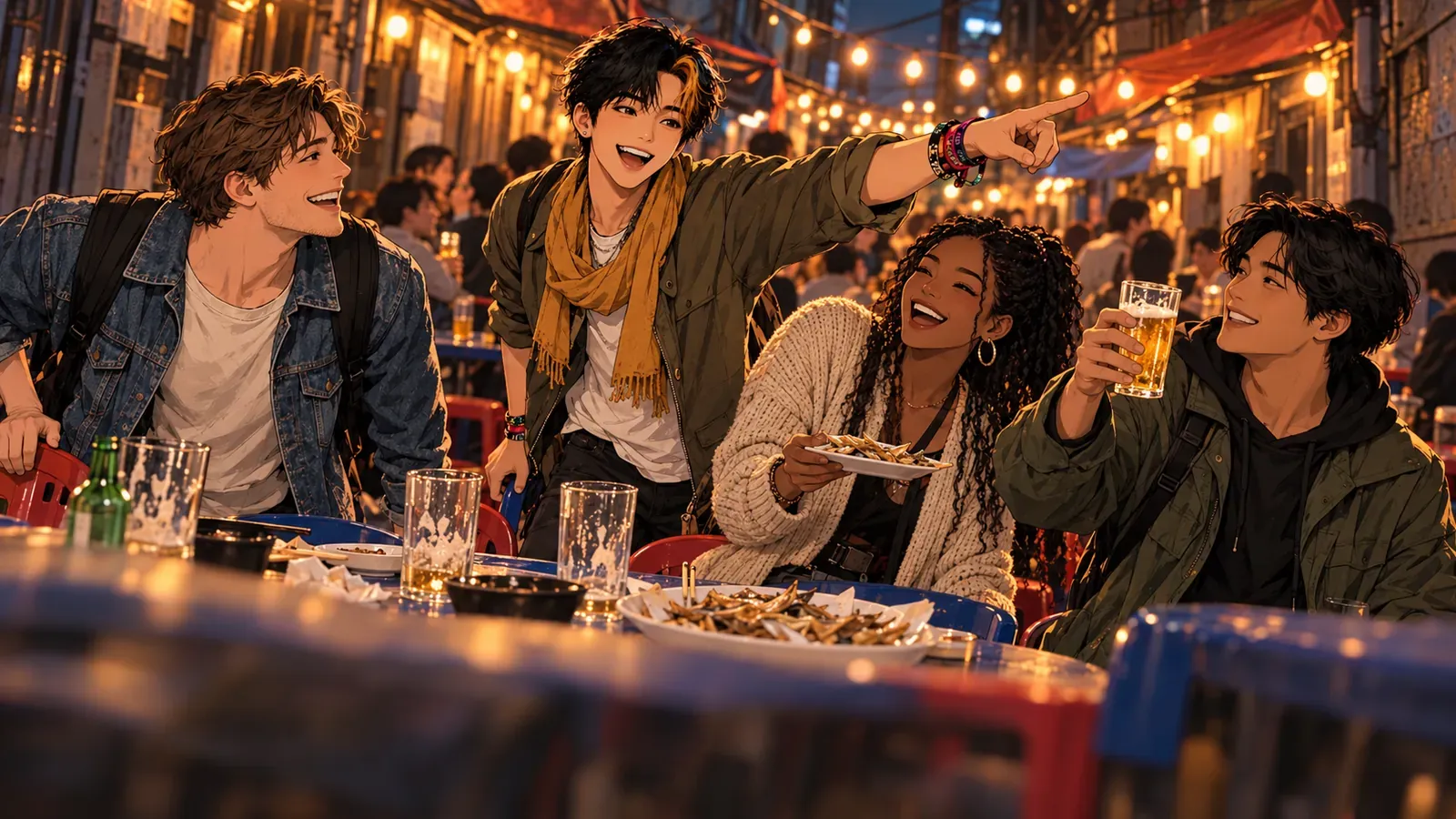
The first thing to understand about a night out in Seoul isn't a place — it's the grammar. People don't settle in one spot. You eat at the first stop (ilcha), move to a second one to drink (icha), and if the night is going well, a third (samcha) for karaoke or a late meal. You physically walk to a new place for each round. The question isn't "where should we go," it's "how many rounds are we doing tonight."
Then comes the neighborhood. Seoul's night has a completely different character in each district, and it splits from the start depending on what you want.
- The night moves in rounds (chasu). First round: a meal — usually a grill or a Korean restaurant. Second round: you relocate to a bar or a pojangmacha (tented bar). Third round, if there is one: karaoke, a late-night meal, or one more bar. You walk to each.
- Euljiro (을지로) — a printing district by day, converted bars by night. Draft beer in Nogari Alley runs about ₩3,000 a glass, a dried pollack about ₩1,000. Come here if you want the most Korean version of a late night — though the redevelopment pressure isn't abstract here: the original Euljiro OB Bear was forced out by a redevelopment in 2022 and only came back in 2024.
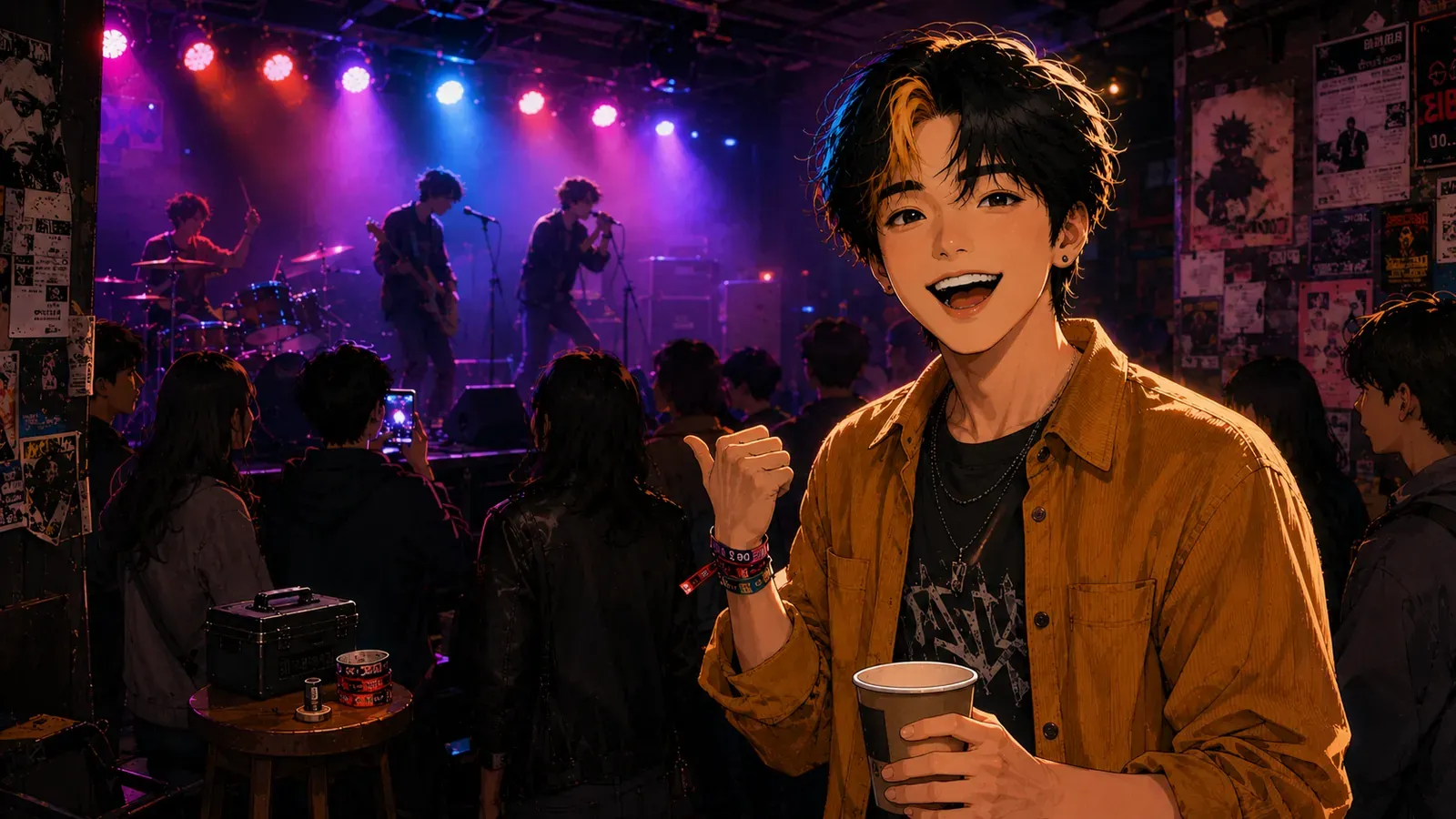
- Hongdae (홍대) — the youngest and cheapest (beer from about ₩3,000). Indie live music, small clubs, street performers, running till dawn. Start here if it's your first night out.
- Itaewon (이태원) — the most international, and where English works best. Jazz bars, pubs, drinking spots from a dozen countries.
- Seongsu (성수) — converted-warehouse cocktail bars and natural-wine bars. The quiet, atmospheric end.
- Gangnam (강남) — the expensive clubs and lounges, with cover charges and table minimums. Only if a specific club is the plan.
- Paying and getting home: the "free" snack that arrives at your table isn't free. The subway stops around midnight; after that it's a taxi (with a late-night surcharge) or a night bus. Save your accommodation in your map app before you're drunk.
What is chasu?
In Korea, a night of drinking rarely ends where it started. The first round (ilcha) is usually a restaurant — you eat and drink at a grill or a Korean place. The second round (icha) relocates somewhere drinking is the point — a beer hall, a pojangmacha, a bar. The third round (samcha) is optional: karaoke (here's how coin noraebang works), a bowl of gukbap or ramyeon, or one more bar.
The key is that each round means walking to a different place. So a night out is naturally a loop through a neighborhood. For a visitor, that means you shouldn't lock onto one venue — think "two or three spots in this area" instead.
Why does Euljiro come alive at night?
Euljiro is an industrial district, dense with print shops and tool suppliers. By day it's still a working neighborhood. But the old buildings have cheap rent and high ceilings, and over the last few years young people started converting the second and third floors into bars and wine bars. There's often no sign — you find it because someone told you where it was. That's where the nickname "Hipjiro" comes from.
The easiest entry point is Nogari Alley. It started in 1980 with a beer hall called Euljiro OB Bear, serving cheap drinks to printing-district workers coming off overnight shifts. Sit down and you get draft beer and nogari (dried pollack) without ordering — about ₩3,000 a glass and ₩1,000 a fish across the alley overall. Plastic chairs, out in the alley.
The redevelopment pressure has already hit this alley once: the original Euljiro OB Bear was forced out by a 2022 building redevelopment, moved temporarily to Mapo-gu's Gyeongui Line Book Street, and only returned to Euljiro in April 2024 (Euljiro: Seoul's old hardware district turned creative hub). So don't picture one continuous bar running since 1980 — this is a comeback, not an unbroken run. Hours vary by day (Monday–Saturday roughly 3pm–11:30pm, shorter on Sunday), so it's worth checking before you go.
What kind of night is Hongdae, Itaewon, Seongsu, Gangnam?
- Hongdae — in front of Hongik University. The youngest and cheapest part of the city. Indie band shows (Seoul's live music scene), small clubs, and street performers all mixed together, going till dawn. Beer around ₩3,000. If it's your first night out, this is the forgiving option.
- Itaewon — the most international neighborhood in Seoul and where English goes furthest. Jazz bars, pubs, and drinking spots from many countries run up the hill. The Gyeongnidan-gil side is quieter, more small alley bars.
- Seongsu — a former shoe-factory area, so there are a lot of high-ceilinged warehouse buildings, now converted into cocktail bars and wine bars. Less "go out and get loud," more "one or two drinks in a well-made room." It's also the center of the natural-wine scene. Seongsu Station, Line 2.
- Gangnam — the big clubs and lounges. There's a cover charge, and a table comes with a bottle minimum. Unless you came for a specific club by name, there's no particular reason to start here.
What is a pojangmacha?
A pojangmacha ("pocha") is a tent or a simple structure with a few plastic tables, selling anju (drinking food) and soju. The real street versions have thinned out, but "indoor pocha" that move that atmosphere inside are common. Chicken feet, rolled omelette, sea snails, fish-cake soup, with soju or beer. Perfect as a second or third round.
The practical stuff for a night out
- The default anju isn't free. The dried snacks or small plate that appear at a bar without your ordering them are usually a cover charge (around ₩3,000–6,000). You can ask them to take it away if you won't eat it.
- The subway stops around midnight. It varies by line and station, roughly midnight to 1am. After that it's a taxi (20% surcharge midnight to 4am) or a night bus (routes starting with N). Here's what to do when you miss the last train.
- Save your accommodation in your map app before you're drunk. Typing an address into KakaoT or Uber while drunk is harder than it sounds.
- Drinking in public is legal in Korea. Buy at a convenience store and drink it in a Han River (한강) park or on a bench — it's a big part of the night culture. The Han River, the way Seoul actually uses it.
- Splitting the bill isn't the default. One person often covers a whole round, and someone else covers the next. Among travelers, just split it — nobody minds.
 A Note From Daniel — our real human editor
A lot of places stay open late in Seoul even outside the touristy strips — convenience stores especially, most of which run 24 hours. You can buy alcohol and simple snacks there any time and take them back to your accommodation. If you need painkillers or digestive medicine, convenience stores carry those too. Here's what Seoul locals actually buy at convenience stores.
 Joon's Tip
Thinking of Seoul's nightlife as "one place" is how you get it wrong. Pick a neighborhood — Hongdae if it's new to you, Euljiro if it isn't — and walk between two or three spots inside it. Going all the way to Gangnam for one club only makes sense if there's a real reason it has to be that club.
A night out in Seoul moves in rounds (chasu): first a meal, then relocate to a bar or pojangmacha, then optionally karaoke or a late meal — walking to each. By neighborhood: Euljiro (을지로) is converted print-district bars, cheap and very Korean — Nogari Alley draft beer is about ₩3,000, hours vary by day and shorter on Sunday; Hongdae (홍대) is the youngest and cheapest, indie music and small clubs till dawn; Itaewon (이태원) is the most international with the best English; Seongsu (성수) is quiet converted-warehouse cocktail and natural-wine bars; Gangnam (강남) is expensive clubs with covers and table minimums. The snack that arrives unordered is a paid cover (₩3,000–6,000). The subway stops around midnight; after that, taxi (20% late surcharge) or an N-prefix night bus. Drinking in public is legal. Prices and hours shift — check locally.