Where to Buy Korean Ceramics, Homeware and Kitchen Things (and What's Worth the Suitcase Weight)
Everyday dishes are cheapest at Namdaemun's Daedo Mall; artist ceramics are in Insadong and museum shops; bangjja brassware is real craft. Where to buy what, with prices.

Partly personally verified — Daniel checked some of these in person
How we verify →·Last verified ·6 min read
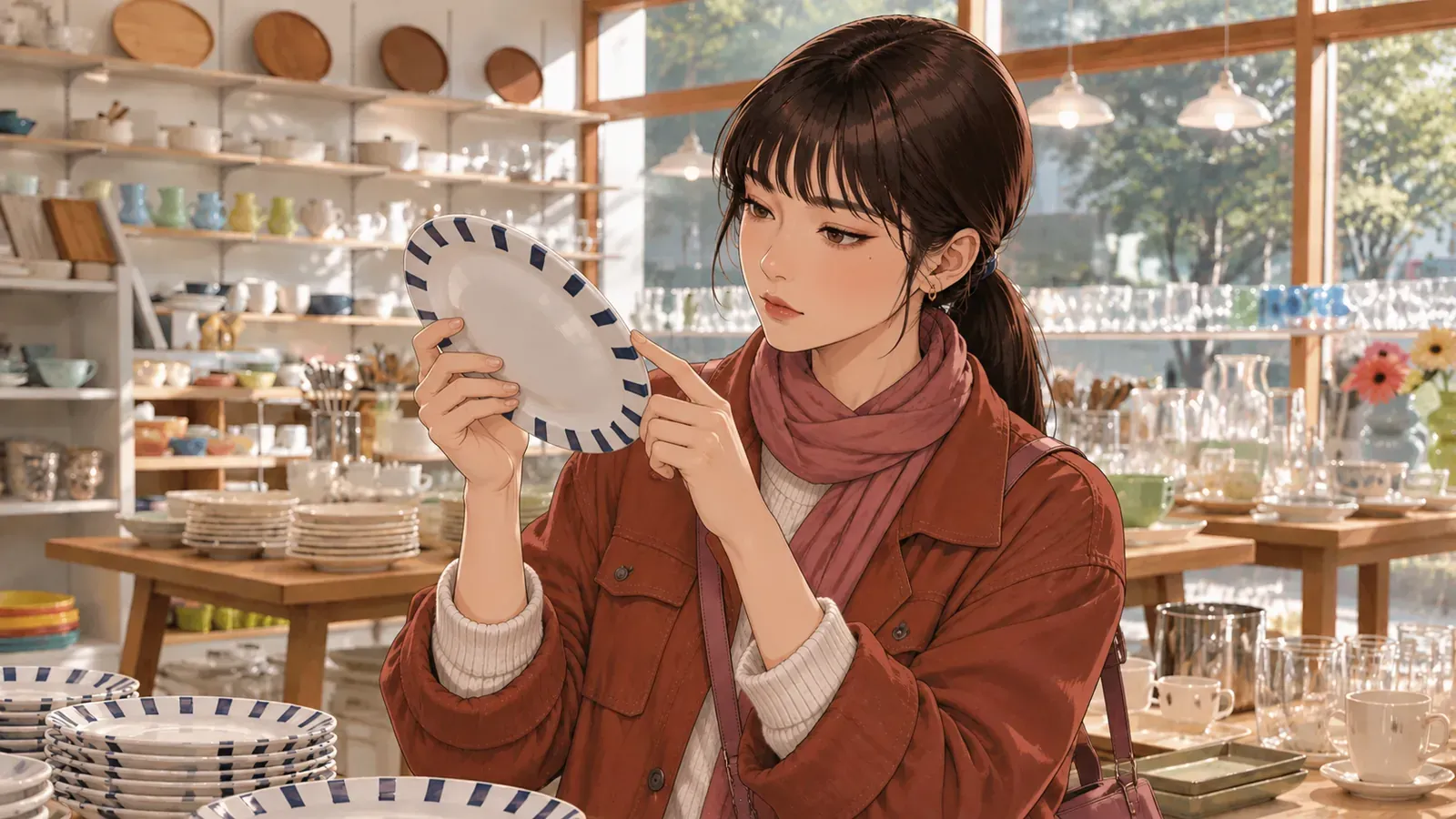
The answer to "what do I buy in Korea" isn't only skincare and clothes. Bowls, brass spoons, an earthenware pot, design objects — things with no size, less trend risk, and daily use at home. The catch is where you buy them. Buy in an Insadong (인사동) gallery and it's lovely but marked up; buy in a Namdaemun (남대문) arcade and it's half the price, but you won't find it unless you know which building sells what.
- For everyday dishes and kitchen things, Namdaemun Market (남대문시장) is the best value. The third floor of Daedo Shopping Mall (대도상가) is the local kitchenware hub — plates run ₩3,000–15,000, and you can negotiate on sets. Open 8:30am–6:30pm, closed Sundays and public holidays.
- Artist and brand ceramics (baekja, buncheong) are in Insadong galleries and museum shops. Browsing is free. A single plate is ₩20,000–80,000+ — pick only what you'll use daily.
- Bangjja yugi (hand-forged brassware) is real craft — a National Important Intangible Cultural Property since 1983. A rice-and-soup set starts around ₩150,000. Heavy and expensive, so only if you'll actually use it.
- Design stationery and objects are at Object (오브젝트) and 10x10 (텐바이텐) — not ceramics; those are for pens, notebooks, small objects.
- Luggage: glass and ceramic are heavy and breakable. Small bowls, a few plates, and a spoon-and-chopstick set are realistic. Don't buy an onggi jar.
Where do you buy everyday dishes cheaply?
The third floor of Daedo Shopping Mall in Namdaemun Market. This is where newlyweds and restaurant and café owners go for tableware. Plates, cups, cutlery sets, pots, stainless pans — Korean products plus dishes from the US (Syracuse), the UK, and Portugal, and prices generally below the shops and online. Buy a set or in bulk and they'll knock something off (don't push too hard — it's already cheap). Closed Sundays and public holidays, so go on a weekday.
Tongin Market (통인시장) has tableware shops too, and Gwangjang Market (광장시장) has a household-goods section inside. But Daedo is better for range and price transparency.
Where do you find artist ceramics (baekja, buncheong, celadon)?
- Insadong galleries — a run of galleries that display and sell ceramics, free to walk through. But there's a tourist-district markup.
- Museum shops — the art shops at the National Museum of Korea, the Leeum Museum of Art, and the National Museum of Modern and Contemporary Art (MMCA) are reliable starting points for ceramics and design goods.
- Department-store living floors — Shinsegae, Lotte, and Hyundai have modern ceramic brands grouped on the homeware floor.
- Hanshin Onggi in Haebangchon — a pottery and ceramics shop that's been in Haebangchon (해방촌) for about 50 years. Jars, teacups, interior pieces. Its clay pots are handmade in Icheon (이천).
If you want to see and buy Korean ceramics properly, there's Icheon — about an hour from Seoul in Gyeonggi Province, with around 80 studios and 300 kilns producing celadon, baekja, buncheong, and modern designer work. It's day-trip range.
 A Note From Daniel — our real human editor
If you'd rather make a piece than buy one, go to Icheon. I did a workshop there with my family — it works for both kids and adults, and because the instructor guides you, everyone comes away with at least one finished piece, usually a mug or a ramen bowl. You either throw on the wheel or paint a pre-made piece. Book the workshop ahead; the good ones fill up.
Is bangjja yugi worth buying?
Bangjja yugi is bronzeware made by hand-hammering an alloy of copper and tin at a ratio of about 78:22. It was designated a National Important Intangible Cultural Property in 1983, it's self-sterilising (impurities like pesticide residue discolour it), and it conducts heat well, so it holds the temperature of hot and cold dishes for a long time.
Yuna's read: this isn't a tourist souvenir, it's a real object. A rice-and-soup set starts around ₩150,000, it's heavy (watch your baggage weight), and it needs care (wash in one direction, dry thoroughly). Worth it if you actually use bowls at home; a waste if it's going in a display cabinet.
Where to buy what, as a table
| What | Where | Price | Verdict |
|---|---|---|---|
| Baekja / buncheong dishes (artist or brand) | Insadong galleries, museum shops, department-store living floors | Plate ₩20,000–80,000+ | Beautiful, big markup. Only what you'll use daily |
| Everyday dishes and kitchen things | Daedo Shopping Mall 3F (Namdaemun), Tongin Market | Plate ₩3,000–15,000 | Best value. Negotiate on sets |
| Bangjja yugi (brassware) set | Insadong, department-store craft halls, brassware specialists | Rice-and-soup set from ₩150,000 | Real craft. Heavy and expensive — only if you'll use it |
| Stainless steel bowls and utensils | Daiso, supermarkets, Namdaemun | Bowl ₩2,000–5,000 | Light and cheap, best everyday value |
| Ttukbaegi (earthenware pot) | Namdaemun, supermarkets, markets | ₩5,000–15,000 | Cheap but heavy and breakable. Think about it |
| Design stationery and objects | Object (Hongdae, Seongsu, Anguk), 10x10 (Daehak-ro), Point of View (Seongsu) | Varies | Not ceramics — stationery and objects only |
All prices are approximate and change.
What do the design-object shops sell?
Object is a consignment store. Its Hongdae (홍대) flagship is a four-storey building — the basement is exhibition space, and floors 2 and 3 are a curated collection of stationery, interior pieces, and accessories from independent artists. There are branches in Anguk (안국) and Seongsu (성수). 10x10 curates stationery, homeware, and character goods from independent designers and lifestyle brands, with a store in Daehak-ro (대학로).
What you buy here is notebooks, pens, masking tape, small objects — not tableware. For ceramics, go to the markets and galleries above.
How do you pack it?
- Ceramic and glass are heavy and breakable. Wrap each piece in clothing, in the middle of the case, not the edges.
- Bangjja yugi is very heavy — if you buy a set, check your baggage weight allowance.
- An onggi jar is big, heavy, and breaks easily, so it's impractical. Small bowls, a few plates, and a spoon-and-chopstick set are the practical picks.
- Tableware is generally fine through customs (it's not meat or food).
 Yuna's Tip
Don't shop for dishes as "souvenirs" — that's how you overpay in Insadong and regret it. Shop with a target: "four plates I'll use at home every day." Buy those at Daedo in Namdaemun for half the price and better quality. If you want one artist piece, budget for it separately and get it at a museum shop or in Icheon.
For everyday Korean dishes and kitchen things, the third floor of Daedo Shopping Mall in Namdaemun Market is the best value — plates ₩3,000–15,000, negotiate on sets, open 8:30am–6:30pm, closed Sundays. Artist ceramics (baekja, buncheong, celadon) are in Insadong galleries (free to browse, tourist markup), museum shops (National Museum of Korea, Leeum, MMCA), and department-store living floors. Bangjja yugi (hand-forged brassware, a National Important Intangible Cultural Property since 1983) is real craft — a set starts around ₩150,000, is heavy, and needs care. Object and 10x10 are for design stationery and objects, not tableware. Icheon (about an hour away, ~80 studios) is the ceramics hub for a day trip. Pack ceramics wrapped in clothing in the centre of the case; skip onggi jars.