What Koreans Actually Eat for Breakfast
The rice-soup-and-side-dishes breakfast is fading — down to two-thirds of people by 2024. What replaced it: the convenience store, a cheap coffee, and the gukbap place that's still open at 8am.

Research-verified — cross-checked against independent sources
How we verify →·Last verified ·4 min read
In this guide4
Visitors often arrive with a picture in their heads: Koreans start the day with rice, soup, and a spread of side dishes. That used to be true. Now it's about half true.
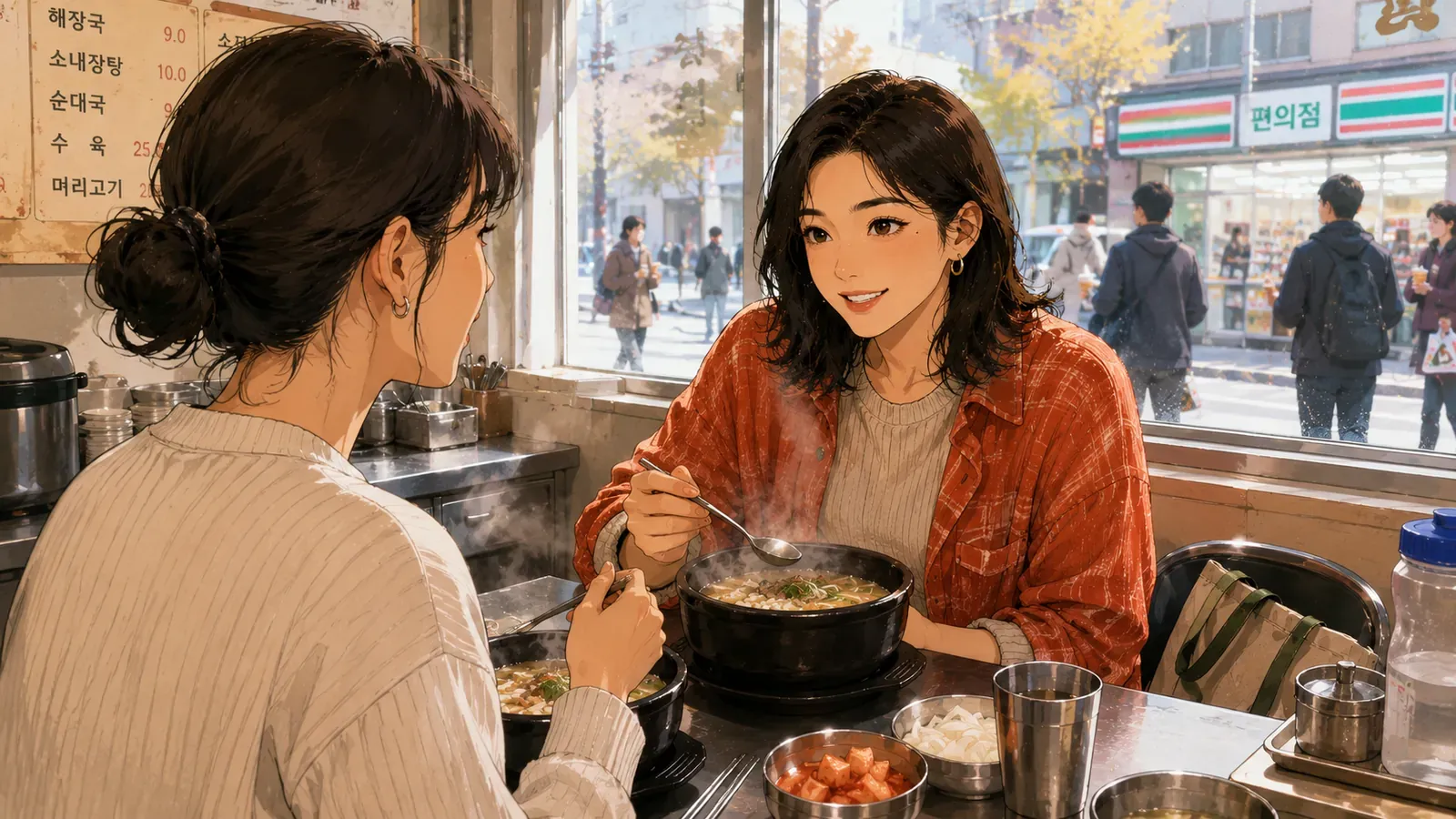
"Korean breakfast" is now two things at once. The rice-soup-banchan breakfast is still standard among older Koreans and outside the big cities, but the share of people eating rice for breakfast fell from 75.2% (2019) to 66.7% (2024), and skipped breakfasts rose to 1.8 a week. Younger city dwellers replace it with convenience-store gimbap + banana milk (₩3,000–4,000), a single cheap coffee (a franchise americano is ₩1,500), a bakery-cafe toast set, or nothing. As a visitor: for the traditional version, go to an old-school gukbap or haejang-guk place that opens early (₩8,000–12,000, eating alone is normal, many open 24 hours) — not a tourist hanjeongsang. Aesthetic cafes often don't open until 11am or noon, so early coffee means a budget franchise, a bakery chain, or the convenience store.
Start with the numbers
In the Korea Rural Economic Institute's annual food-consumption survey, the share of people who eat rice for breakfast fell from 75.2% in 2019 to 66.7% in 2024, and the number of breakfasts skipped per week rose from 1.4 (2021) to 1.8 (2024). The rice-soup-banchan breakfast, made fresh every morning, is still standard in the provinces and among older Koreans. For younger people in cities, it's increasingly the exception.
So what do they eat
It doesn't reduce to one thing. It splits a few ways.
- The convenience store. Triangle gimbap, a gimbap roll, a sandwich, a boiled egg, banana milk. Bought on the way to work, eaten on the subway or at a desk. The convenience store has effectively become the city's breakfast counter.
- Just coffee. A fair number of people replace breakfast with a single coffee — a budget-franchise americano is ₩1,500.
- Bakery cafes. Toast, a croissant, a sandwich, plus coffee. Chains like Paris Baguette and Tous Les Jours have morning sets, and street-toast chains run largely on the morning trade.
- Gukbap and hangover soups. This part is alive and well. Bean-sprout gukbap, sundae-guk, dried-pollock soup. If you drank the night before especially, you go to a gukbap place for a late-morning meal. Many are open 24 hours.
- Something quick at home. Cereal, toast, eggs, fruit instead of rice. The shift is from "setting a table" to "getting it over with."
- Skipping it entirely. Also a big category.
Why it changed
A few things stack up. More people live alone (you don't cook a full breakfast for one). Commutes and school runs are tight. Convenience stores, delivery, and meal kits turned "fast breakfast" into a product. Coffee culture reorganized the morning routine, and the rise of bread and sandwiches at breakfast tracks a broader drop in rice consumption. Brunch growing into its own dining-out category is part of the same current (related: Seoul Brunch, the Way Locals Actually Do It).
What this means if you're visiting
- If you want the traditional Korean breakfast, a gukbap place is the closest answer. Go to an old-school gukbap or haejang-guk spot that opens early and you'll eat what Seoul actually eats in the morning, not a tourist-set hanjeongsang. Eating alone is normal there; ₩8,000–12,000.
- If the hotel breakfast is underwhelming, try the convenience store. Triangle gimbap + banana milk + coffee is ₩3,000–4,000.
- Aesthetic cafes open later than you'd think. Many don't open until 11am or noon. If you need morning coffee, that's a budget franchise, a bakery chain, or convenience-store coffee.
- Gimbap spots (the Kimbap Cheonguk type) open early too, and a roll is ₩3,500–4,500, eaten at the counter.
Either way: "Korean breakfast" is now two things at once — the old version, kept alive in gukbap places, and the current version, running on the convenience store and coffee. As a visitor you can try both.
The share of people eating rice for breakfast fell from 75.2% (2019) to 66.7% (2024) in the Korea Rural Economic Institute's food-consumption survey; skipped breakfasts rose to 1.8 per week. Common replacements: convenience-store gimbap and banana milk (₩3,000–4,000), a single cheap coffee, bakery-cafe toast sets, or nothing. The traditional rice-soup-banchan breakfast survives mainly in gukbap and haejang-guk restaurants (₩8,000–12,000, many open early or 24 hours) and outside the big cities. Aesthetic cafes often open at 11am or later. Figures depend on the survey.
 Mina's Tip
Have one gukbap breakfast on the trip — go early, around 8am, to a place with a worn sign and no English menu, and get whatever the room is eating. It's the cheapest good meal you'll have, and it's a version of Seoul mornings that's genuinely fading. The convenience-store breakfast you can do any other day; it isn't going anywhere.