Been to Japan? Five Things to Rethink Before Visiting Korea
Been to Japan? Before your first Korea trip, rethink restaurant smoking, bus rides, plug adapters, side dishes, and maps.

Research-verified — cross-checked against independent sources
How we verify →·Last verified ·6 min read
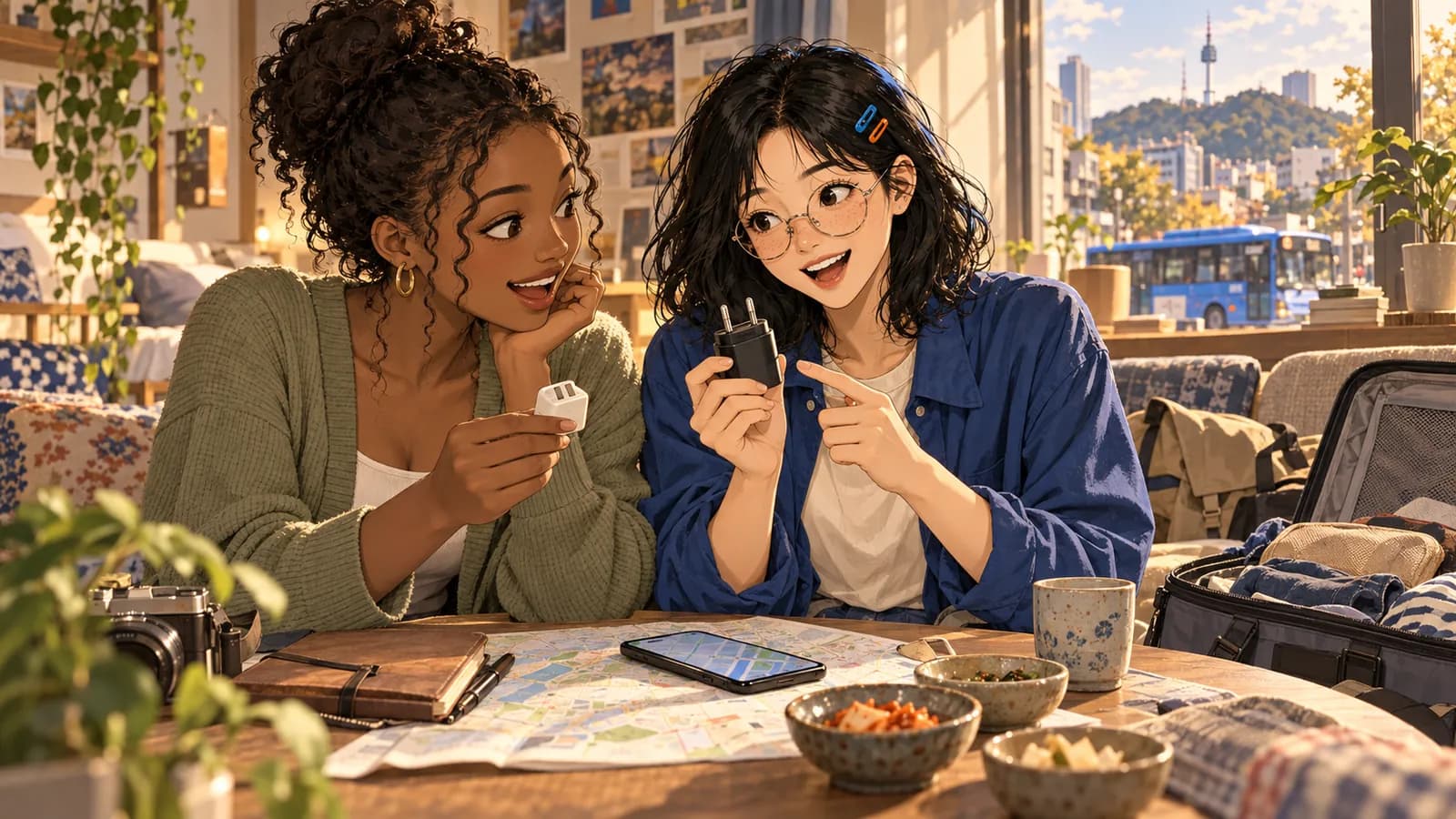
If you have traveled in Japan, a first trip to Korea may feel easy to picture: convenience-store snacks, public transport, dinner at a small restaurant. But familiar-looking plans need a few adjustments. Your Japan habits can catch you out when you board a Seoul bus or try to plug in a charger at your hotel.
In Korea, Japan is sometimes described as a “close yet distant country”—a phrase that holds geographic proximity alongside a complicated history and relationship. Everyday travel has its own differences. If you know Japan and are now planning your first Korea trip, here are five habits and preparations to revisit.
- Even if you encountered smoking in some Japanese restaurants, expect ordinary indoor restaurant and café dining areas in Korea to be smoke-free.
- A Korean city bus may move before you sit down. Hold a rail as soon as you board.
- Check your Japan plug adapter: Korea uses 220V, 60Hz power and round-pin sockets.
- Basic Korean side dishes usually come with the meal. An otoshi at some Japanese izakaya carries a separate charge.
- Prepare Naver Map or Kakao Map for Korea; check your routes before arrival.
You found a smoking-friendly restaurant in Japan. Will Korea be similar?
You may have encountered smoking at some restaurants or drinking establishments in Japan. In Korea, expect ordinary indoor restaurant and café dining areas to be smoke-free, including small neighborhood places. If cigarette smoke beside your table bothered you on a previous trip, this is a useful difference to know.
Korea extended its smoking rules to restaurants of every size in 2015. A separate smoking room does not make smoking at your dining table permissible. If you smoke, check where the designated smoking area is; stepping outside does not automatically make smoking allowed.
Japan also generally prohibits indoor smoking, with exceptions for certain establishments and smoking spaces. The point for your Korea trip is to adjust the expectation you may have formed at a smoking-friendly Japanese venue. Japan’s health ministry explains its exceptions.
What should you do first when boarding a bus?
If a driver waited for you to sit on a bus in Japan, put that departure routine aside when boarding in Korea. A Korean city bus may begin moving before you reach a seat. After tapping your transport card, grab a rail or pole before walking farther down the aisle.
Avoid rushing toward an empty seat while the bus is moving. If you need extra time or assistance, tell the driver. Wait for the bus to stop before moving to get off.
Japanese buses do not universally wait for every passenger to sit: official safety guidance includes passengers standing safely. Hold on in either country, and avoid relying on a departure rhythm from a previous trip. Traveling with children? Read our family transport guide.
Can you bring the charger and adapter you used in Japan?
Check again before packing. Japan’s standard supply is 100V, and its familiar outlets take two flat pins. Korea uses 220V at 60Hz, with round-pin sockets. Prepare an adapter that fits Korean Type F sockets if your plug does not. JNTO explains Japan’s electricity; Electrical Safety First covers Korea’s sockets and voltage.
Read the charger’s INPUT label. A rating such as 100–240V, 50/60Hz covers Korea’s supply, so it can be used with a suitable plug adapter, subject to the manufacturer’s instructions. A plug adapter changes the connection shape; it does not turn 220V into 100V.
Be especially careful with a hair dryer or straightener bought in Japan and rated for 100V only. Do not connect it to a Korean socket using just a plug adapter. Bring a device the manufacturer confirms is compatible with Korea’s supply, or use one provided by your accommodation. Check hair tools separately from phone chargers.
Is that small dish you did not order free?
Did an unrequested appetizer at a Japanese izakaya turn into an otoshi charge on your bill? In a Korean restaurant, kimchi and vegetables arriving with your meal are usually included basic side dishes: banchan (반찬). An automatically served small plate need not trigger the same expectation of a seating charge. VISITKOREA explains the side-dish custom.
Basic banchan refills are often available, sometimes from a self-service counter. A separately listed dish or an item marked with an extra charge is a different matter. Check whether it is an included side or a separate order before asking for more.
Otoshi is a custom at some Japanese izakaya; the comparison here is with that experience, rather than with every Japanese restaurant. Tokyo’s official dining guide explains otoshi. Our Korean restaurant guide covers ordering and self-service for your next trip.
Should you prepare different map apps?
The app icon may be familiar; the routing tools deserve another look. If you used Google Maps to find places in Japan, prepare Naver Map or Kakao Map for Korea as well. Korea’s tourism organization recommends these apps for English-language navigation.
That does not mean Google Maps has no use in Korea. Features and map data change, and place search is different from navigation. Save your accommodation and destinations in a local map app, with the Korean place names alongside them, whether you are visiting Seoul or Busan.
Try a route from your hotel to your first stop before you arrive. It is an easy way to check that your travel plan translates into a usable journey. See our essential Seoul apps guide for more preparation.
Your Japan trip is a useful starting point for planning Korea. Before flying, check your charger and map apps. Once you arrive, give familiar restaurant and bus routines another look. The differences between these close yet distant neighbors show up in small moments, too.
- Expect ordinary Korean indoor restaurant and café dining areas to be smoke-free.
- Hold a rail immediately after boarding a Korean city bus.
- Check your charger’s input rating and bring an adapter for Korean sockets.
- Basic Korean banchan usually comes with the meal; check separately priced items.
- Save Korean destinations in Naver Map or Kakao Map before heading out.