Where to Stay in Seoul: An Honest Neighborhood Read
Not a hotel list — which neighborhood is for which kind of trip, and the one logistics question that matters more than the view.

Partly personally verified — Daniel checked some of these in person
How we verify →·Last verified ·6 min read
This isn't a hotel list. It's about which neighborhood suits which kind of trip, and the one logistics question that matters far more than the view.
The most common mistake is assuming Gangnam is the center of Seoul and booking there. The main sights — the palaces, the hanok villages, the traditional markets — are mostly north of the river. Gangnam is the neighborhood of business, luxury shopping, and modern hotels; it isn't a base for first-time sightseeing.
Match the neighborhood to the trip, and check one thing above all — how close it is to a subway station. First trip, 3–4 days → Myeongdong or Jongno: sights, transit, and conveniences in one place, north of the river where the palaces and markets are. Repeat visit / local texture → Yeonnam, Seongsu, or Mangwon. Budget → a guesthouse in Hongdae or Yeonnam. Family or older travelers → a large hotel in Jongno with an elevator and a station attached. Gangnam is a business and luxury-shopping district, not a first-time sightseeing base. For April (blossoms), October (foliage), and year-end, book three to six months ahead — prices can double.
| Neighborhood | Best for | Main downside |
|---|---|---|
| Myeongdong | First trip, short stay — sights and transit within walking distance | Tourist crowds and touting at night; higher rates |
| Jongno & Insadong | Families, older travelers, culture — palaces and markets walkable | – |
| Hongdae | Budget stays, nightlife — direct airport-rail to Hongik Univ. Station | Night noise |
| Yeonnam | Repeat visitors who want local texture | – |
| Seongsu | Seeing what Seoul is into right now | Fewer hotels |
| Gangnam | Business trips, Coex or Garosu-gil | Not a base for first-time sightseeing |
| Itaewon & Hannam | International food and bars, galleries, high-end retail | – |
Neighborhood by neighborhood
- Myeongdong (명동) — the strongest first-timer infrastructure. Cosmetics, currency exchange, street food, a direct airport bus (the 6015). Sights and transit within walking distance. In exchange, the evenings bring the crowds and touting that come with a tourist district, and room rates run higher.
- Jongno (종로) and Insadong (인사동) — the palaces, Bukchon (북촌), and Gwangjang Market (광장시장) are all walkable. Calmer than Myeongdong, and 15 minutes' walk from it. The range runs from large hotels to guesthouses. If you're traveling with older relatives or kids, this is where the flat ground and station-adjacent big hotels are.
- Hongdae (홍대) — students, nightlife, buskers, indie cafes. Plenty of budget accommodation, and a direct airport-rail connection at Hongik University Station (홍대입구역). The downside is night noise; it doesn't suit anyone who wants to sleep quietly.
- Yeonnam (연남동) — Hongdae's mood with the volume turned down. Guesthouses and small stays run along the old railway park, and it's walkable to Hongik University Station. A good fit for a repeat visitor who wants the local texture.
- Seongsu (성수동) — design, concept shops, cafes. Come here if you want to see what Seoul is into right now, but the hotel count is still low. Worth it if the trend is the point.
- Gangnam — as above. The exception is if Coex or Garosu-gil (가로수길) is your reason for the trip, or you're here on business.
- Itaewon (이태원) and Hannam (한남동) — international food and bars, with galleries and high-end retail in Hannam. The area contracted after the 2022 Itaewon crowd crush and has been recovering since. The neighborhood itself is safe and operating normally.
How do you choose where to stay in Seoul?
- First trip, three or four days — Myeongdong or Jongno. Sights, transit, and conveniences in one place.
- Repeat visit, local texture, two weeks or more — settle into a neighborhood like Yeonnam, Seongsu, or Mangwon (망원동).
- Budget first — a guesthouse in Hongdae or Yeonnam.
- Family or older travelers — a large hotel in Jongno, with an elevator, flat ground, and a station attached.
- For cherry blossom season (April), fall foliage (October), and the end of the year, book three to six months ahead. Prices can double.
- Once you've picked a neighborhood, When to Actually Book a Seoul Hotel covers the timing question in more depth — especially the gap between how an ordinary hotel and a five-star one price a booking.
 A Note From Daniel — our real human editor
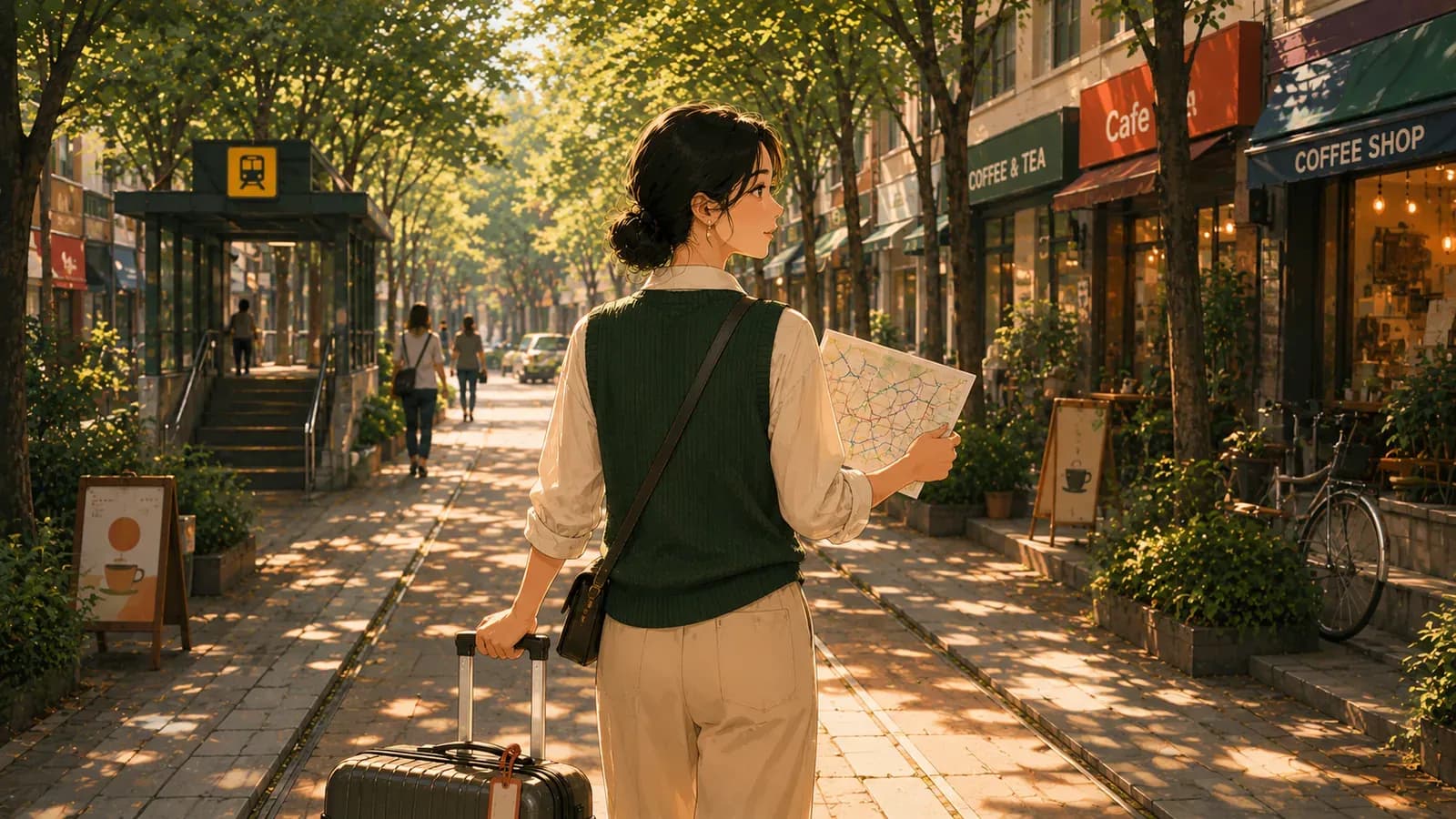
The subway is the easiest way to get almost anywhere in Seoul. You'll be using it all trip, so the one thing I'd check before booking anything is how close the place is to a station. You arrive from the airport dragging a heavy suitcase, and by the third day you've added shopping bags to it. I've watched a lot of guests get worn down by a walk that was supposed to be five minutes and turned into fifteen with luggage. The exception is when the walk itself is good — in Yeonnam, the old railway park people call "Yeontral Park" is the kind of route where the distance stops mattering, because you're actually seeing the neighborhood on the way.
 Soo's Tip
Before you book, find which subway station is closest to the place and which line it's on (here's how the fares and transfers actually work), and screenshot it. If it's a station on a main line — Line 2, Line 4, or the airport railroad — most of your trips get easier.
Gangnam isn't a good base for first-time sightseeing (the sights are mostly north of the river). First trip / short stay: Myeongdong or Jongno. Repeat visit / local feel: Yeonnam, Seongsu, Mangwon. Budget: a Hongdae or Yeonnam guesthouse. Family or older travelers: a large Jongno hotel. The first thing to check when choosing is how close it is to a subway station. Book three to six months ahead for April, October, and year-end. No specific hotels recommended here — choose on location.