Why Seoul Is Built on Cafes
Seoul has more than 24,000 cafes. They're not just for coffee — they're the city's living rooms, studies, and meeting points, and the reason neighborhoods rise and fall.

Research-verified — cross-checked against independent sources
How we verify →·Last verified ·5 min read
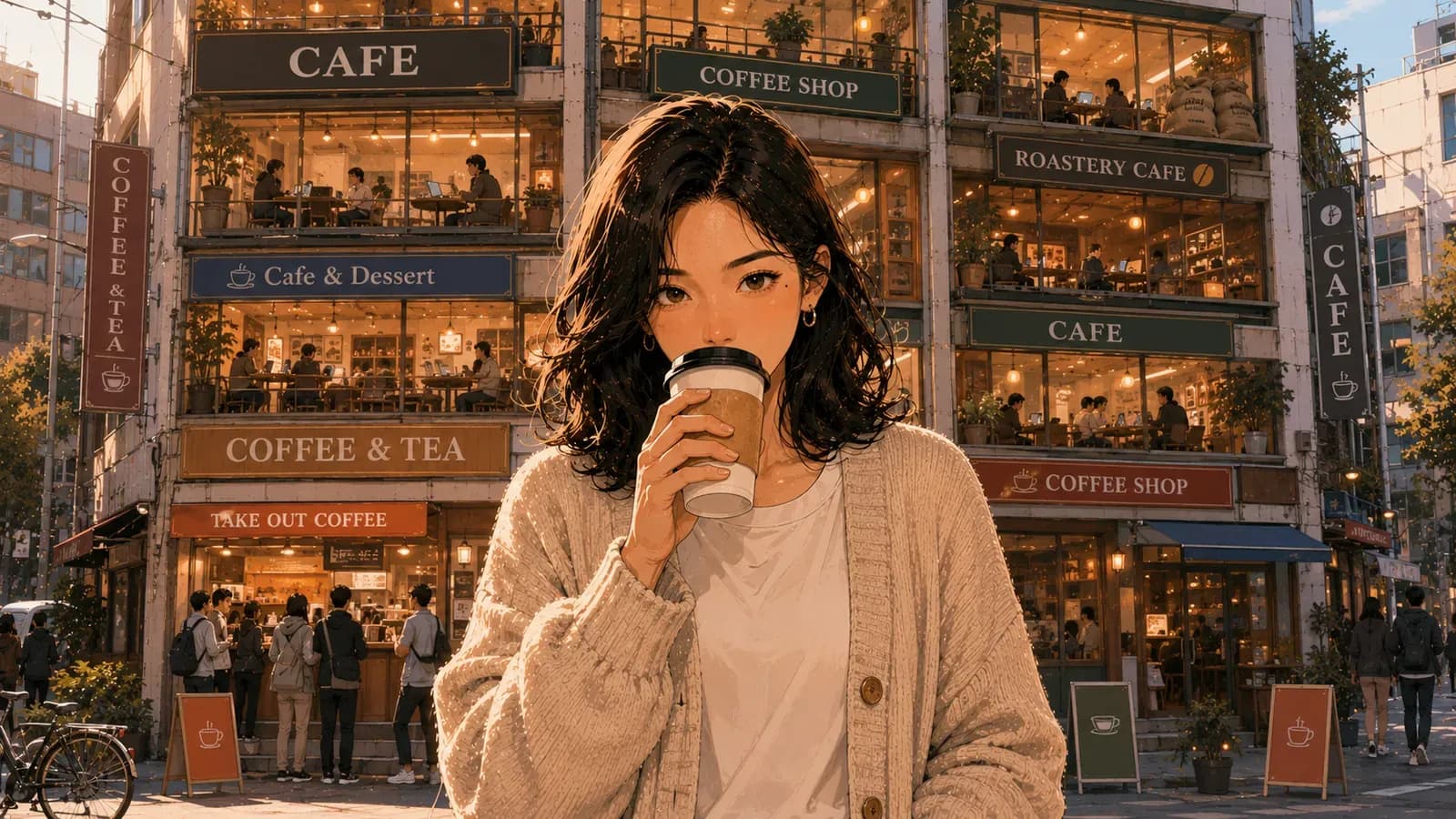
Start with the numbers. The number of cafes in Korea grew from about 69,000 in 2019 to about 102,000 in 2023. Seoul alone has more than 24,000 of them, roughly 6,000 of which are franchises. Per-person coffee consumption is around 405 cups a year — more than twice the global average. At that density, a cafe isn't somewhere you go occasionally. It's infrastructure.
Seoul has over 24,000 cafes and per-person coffee consumption around 405 cups a year (≈2.6× the global average), because a cafe here is infrastructure, not a treat: small homes and little home-hosting make it the default place to meet anyone, study cafes are their own paid-by-the-hour category, and the "aesthetic cafe" content loop drives a constant churn of openings. For a visitor: a cafe is the reliable source of a bathroom, wifi, air conditioning, and a seat — if you're lost or footsore, the answer is a cafe. Prices have split: a budget-franchise americano is ₩1,500–2,000, a specialty one ₩5,000–7,000, little in between. The photogenic cafe is a once thing (good photos, ordinary coffee); pick one budget-franchise or old-style place near where you stay and make it your regular — that's how people here actually do it.
Why there are so many
No single reason explains it. A few things stack up.
- Homes are small, and people don't host at home much. So the default setting for meeting anyone is a cafe. Seeing a friend, a first date, group coursework, signing a lease — you meet at a cafe first. It functions as an extended living room.
- Study cafes are their own category now. They're unstaffed spaces with desks you pay for by the hour, and they've quickly replaced the old paid study halls. During exam season they're full.
- The barrier to opening one is low. Franchises hand you a turnkey package, so retirees and people in their twenties both jump in. Supply runs ahead of demand, and the closure rate is high to match — half the cafes on a given block will be a different cafe two years later.
- The "aesthetic cafe" economy. The interior and the plating are part of the product. A new cafe opens, it becomes content on Instagram and blogs, and the content pulls people in. The cycle of a neighborhood becoming fashionable and then fading tracks this loop closely — Seongsu (성수동), Yeonnam (연남동), and Euljiro (을지로) all rose this way. (Euljiro's workshop-turned-cafe scene is covered in the Euljiro guide.)
- Prices have split. A budget-franchise americano is ₩1,500–2,000; a specialty one is ₩5,000–7,000. The middle is thin. (The full price breakdown, tier by tier.)
What this means if you're visiting
In Seoul, a cafe is the default source of a bathroom, wifi, air conditioning, and a place to sit. If you're lost, footsore, or killing thirty minutes, the answer is a cafe, because there's always one.
And separating what you want from a cafe cuts down on disappointment. The aesthetic cafe is a once thing — the photos are good and the coffee is often ordinary. The one you go to every day is a budget-franchise branch or an old-style tearoom — not photogenic, but consistent and cheap. Picking one place you like and going back to it is closer to how people here actually do it than hitting three new cafes in an afternoon.
One more thing: whether it's fine to nurse a single drink for hours varies by cafe. At aesthetic cafes and places with few seats, you'll feel it; at franchises and large places, it's fine; study-cafe formats charge by the hour anyway.
Korea has roughly 100,000 cafes; Seoul has over 24,000. Per-person coffee consumption is around 405 cups a year, about 2.6× the global average. Budget-franchise americano: ₩1,500–2,000. Specialty: ₩5,000–7,000. Study cafes charge by the hour. Cafes are the reliable place to find a bathroom, wifi, air conditioning, and a seat. Figures are approximate and depend on how "cafe" is counted in business registrations.
 Mina's Tip
Pick one cafe near where you're staying and make it your regular for the trip — Leesar in Yaksu is the model for what that looks like done right. You'll get better coffee, you'll stop wasting mornings deciding, and the staff will start making your drink before you order it. Save the photogenic ones for a single visit each.