How to Eat at a Korean Restaurant (Banchan, the Call Button, and the Scissors)
One mental shift covers most of it: a Korean restaurant isn't somewhere you wait to be served. It's somewhere you call when you need something.

Partly personally verified — Daniel checked some of these in person
How we verify →·Last verified ·6 min read
In this guide8
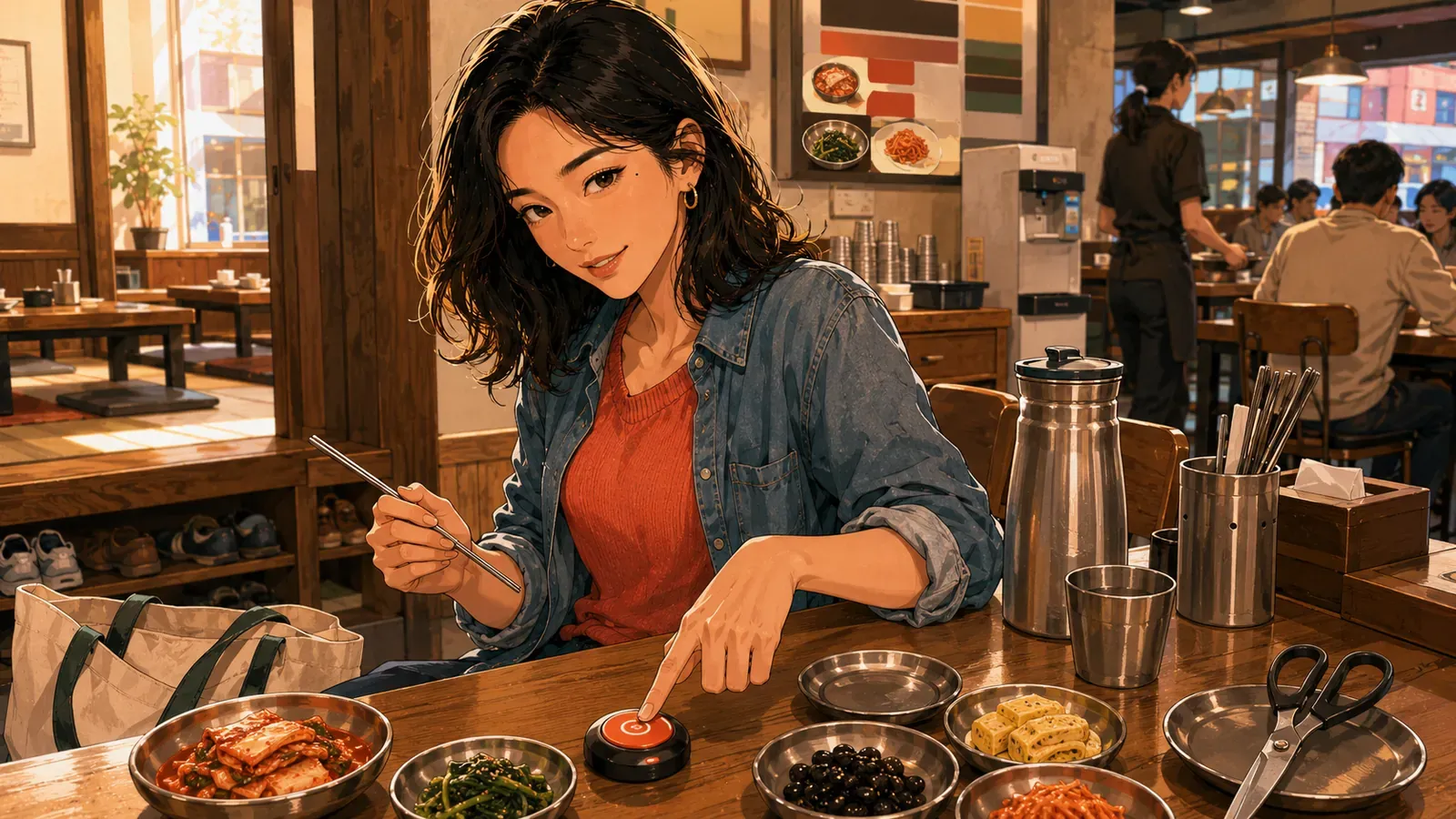
One mental shift covers most of it: a Korean restaurant isn't somewhere you wait to be served. It's somewhere you call when you need something. A server not coming back to check on you isn't rude — that's just how it works.
A Korean restaurant is somewhere you call when you need something, not somewhere you wait to be served. Banchan (the small side dishes) is free and refillable — say deo juseyo — but take only what you'll eat. Water and utensils are self-serve, by the table or a dispenser. To get attention, press the call button or say jeogiyo — calling out is normal, you don't raise a hand. At grill restaurants, a staff member often cuts the meat with scissors, and many require a two-person minimum order. Floor-seating (ondol) rooms are shoes-off — wear socks. You pay at the counter by the door on the way out, and there is no tipping. Eating alone is completely normal at gimbap, gukbap, and baekban places; it's mainly grill and some stew restaurants that have the two-person rule.
Is banchan free at a Korean restaurant?
When you sit down, several small side dishes arrive. They're free, and refills are free — say ribil juseyo or deo juseyo ("more, please"). Take only what you'll eat, though; loading up and leaving it is bad form. (Eating vegetarian or vegan here takes some planning — most banchan and stews are built on anchovy or shrimp.)
Where do you find water and utensils?
Usually self-serve. The water jug and cups are by the table or near a dispenser; the utensils are in a drawer in the table or in a metal case. Napkins too.
How do you call a server in Korea?
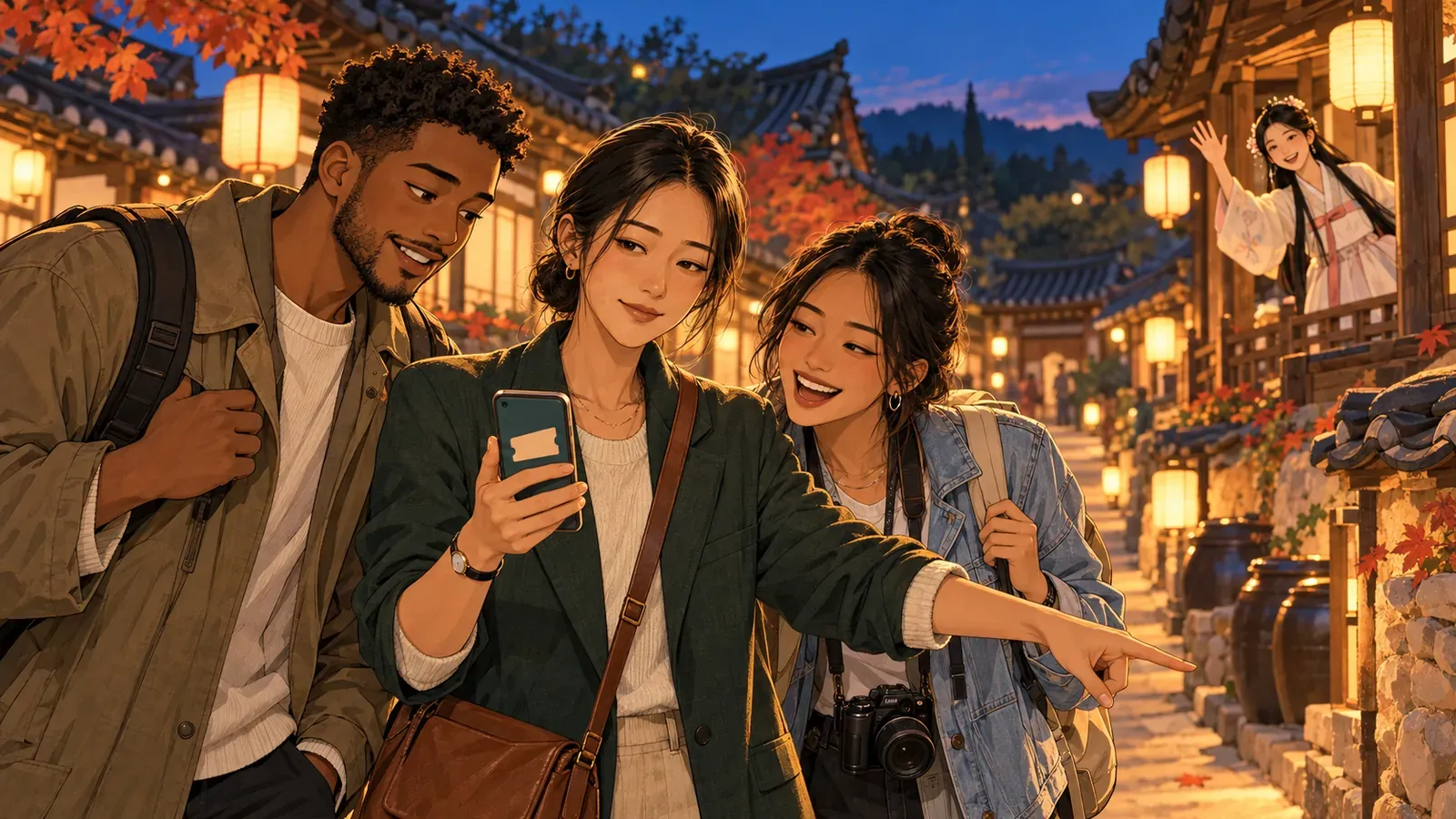
Casual restaurants have a call button on the table. If there isn't one, say jeogiyo or yeogiyo ("excuse me"). You don't need to raise a hand or catch anyone's eye — calling out is normal.
How does a Korean BBQ (grill) restaurant work?
At some, staff do the initial grilling for you; at others it's self-serve from the start. Cutting the meat with scissors is standard, and usually a staff member does it. If the grill plate burns, you can ask for a new one. Grill restaurants often take orders for two portions minimum. For the full order-by-order walkthrough, see how Korean BBQ works.
Shoes-off rooms
Restaurants with floor seating (ondol rooms) have a shoe cabinet at the entrance. Wear socks.
Shared dishes
Banchan is eaten communally, with your own chopsticks; stews are eaten from the shared pot with a shared spoon. If that bothers you, ask for apjeopsi — a small individual plate.
How do you pay at a Korean restaurant?
Most places don't take payment at the table — you pay at the counter by the door on your way out. Splitting the bill has become common, but one person paying and settling up later is still normal. There's no tipping — tipping isn't a thing here. One place where the total is built differently is a fish market like Noryangjin (노량진), where you buy first and eat second — here's how that bill adds up.
Can you eat alone at a Korean restaurant?
Gimbap places, snack spots, gukbap (soup-and-rice) restaurants, and baekban (home-style set meal) restaurants all welcome solo diners. Eating alone is completely normal. It's mainly grill restaurants and some stew places that have a two-person minimum.
 A Note From Daniel — our real human editor
This is a slightly embarrassing thing to admit, but at busy hours some restaurants will turn away a solo diner — they'd rather give the table to a group. I think it's a regrettable habit. Going a little before or after the rush mostly makes it a non-issue.
 Mina's Tip
There are safe orders even if you can't read the menu — bibimbap, kimchi jjigae, doenjang jjigae, jeyuk (spicy stir-fried pork), naengmyeon. If you don't do spicy, ask whether they can make it deolmaepge ("less spicy"). Where there's a picture menu, just point.
For the handful of manners that actually matter at a shared table — two hands, pouring, who starts first — see what Korean etiquette really asks of you.
Visited Japan before? Our five things to rethink before visiting Korea explain how restaurant smoking rules and basic side dishes may differ from your previous trip.
Banchan is free and refillable — take only what you'll eat. Water and utensils are self-serve. To get attention, use the call button or say jeogiyo. At grill restaurants a staff member cuts the meat with scissors; many have a two-person minimum. Floor-seating rooms are shoes-off. Banchan is shared, eaten with your own chopsticks (ask for apjeopsi for an individual plate). Pay at the counter on the way out — no tipping. Eating alone is normal at snack spots, gukbap, and baekban restaurants.