Seoul in Winter, and What It Actually Feels Like
A dry -8°C cold, not a wet one. What to layer, the winter street food, the ice rink and lantern festival, and where to duck indoors when it's too cold to walk.

Partly personally verified — Daniel checked some of these in person
How we verify →·Last verified ·6 min read
The thing first-time visitors notice about a Seoul winter is the kind of cold it is. Not a damp cold — a bone-dry one. January averages about −2°C, so afternoons hover near freezing and nights run colder. Snow isn't frequent, but when it comes, the sidewalks are ice the next day.
And yet Seoul is a good city in winter — more precisely, it's a city with a lot of places to duck into out of the cold, and some things that only exist in winter.
- A dry, hard cold. January averages about −2°C, with afternoons near freezing and colder nights; February is similar. Snow is occasional and turns to ice. Because it isn't humid, layers are enough.
- What to wear: thermal base layer + a sweater + a windproof puffer. Gloves, scarf, hat. And convenience-store heat packs (about ₩1,000) — one in each pocket.
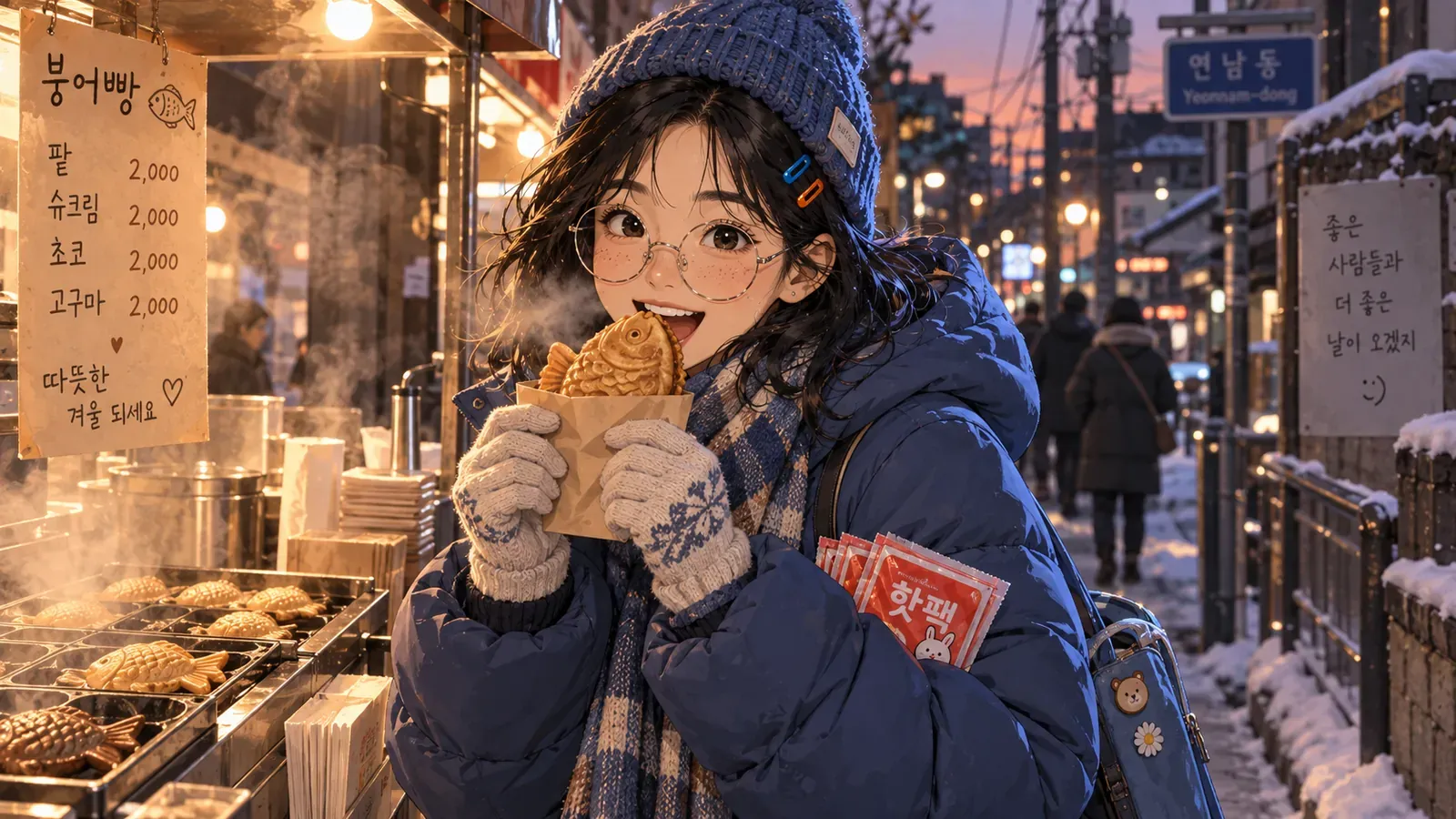
- Winter street food: hotteok, bungeoppang (fish-shaped, red-bean), gyeranppang (egg bread), roasted sweet potato, roasted chestnuts. From market stalls and carts by subway exits.
- Only in winter: the outdoor ice rink at Seoul Plaza (about ₩1,000/hour, roughly mid-December to early February), the Seoul Lantern Festival along Cheonggyecheon (roughly mid-December to mid-January, lit in the evening). Exact dates change every year — check the official listing.
- Indoor escapes: cafes (why Seoul runs on cafes), underground shopping arcades, jjimjilbang (jjimjilbang 101), museums (the National Museum of Korea's permanent collection is free for now).
- What closes: around Lunar New Year (the date shifts each year), some independent restaurants and shops close for a few days.
How cold is it?
January is the coldest — it averages about −2°C (the Korea Meteorological Administration's 1991–2020 normal for Seoul), with afternoons near freezing and colder evenings. February is similar and eases a little at the end. The key is that it's dry. The same sub-zero number is more bearable than a wet cold, which is why several thin layers beat one thick coat.
Wind is the variable. Anywhere open — a Han River (한강) bridge, the outdoor rink — it feels noticeably colder than the thermometer says. Dress so you can add and drop layers easily as you move between inside and out.
What should you wear?
- A thermal base layer (Heattech-type) against the skin.
- A mid-layer — sweater, knit, fleece.
- An outer layer — a windproof puffer or a heavy wool coat.
- Hands, ears, neck — touchscreen gloves, a hat or ear covers, a scarf. If your hands, ears, and neck are exposed, the rest of you can be bundled and you'll still be cold.
- Shoes — waterproof, with a sole that isn't slick. The day after snow, the pavement freezes.
- Heat packs — about ₩1,000 at any convenience store. There are stick-on ones and hand-warmer ones; carry one in a pocket and it changes how the day feels.
If you need larger-size winter clothing you didn't pack, buying here is an option — but the trendy domestic brands run small, so if you're not a Korean size, head for the SPA-brand or global-brand stores.
What only exists in winter?
- The Seoul Plaza outdoor ice rink. A temporary rink goes up on the plaza in front of City Hall every winter. Admission is very cheap — about ₩1,000 an hour, skate rental included. There's a general rink and a separate children's rink. Roughly mid-December to early February — confirm the exact run with the Seoul city listing for your dates.
- The Seoul Lantern Festival on Cheonggyecheon. A winter festival of hanji-paper lanterns and LED installations along the Cheonggyecheon (청계천) stream, lit in the evening until around 11pm. Roughly mid-December to mid-January, dates vary by edition. Free.
- Everland and Nami Island in winter. Everland runs Christmas and winter-season decorations and a festival, with a separate Snow Festival in January–February. Nami Island is a snow-scene destination when it snows. Both are day trips out of Seoul (day trips from Seoul).
Check event dates against your travel window on the official sites — what's above is "roughly this time of year," not a confirmed date.
 A Note From Daniel — our real human editor
Bungeoppang deserves its own mention as a winter-only street snack. It used to be red-bean only, but these days you'll find custard-cream, pizza, and sweet-potato fillings too. I still think the original red-bean is the best of the bunch — if you pass a bungeoppang cart on a cold Seoul street, it's worth stopping for.
Where do you go when it's cold?
Seoul is a good city for ducking indoors.
- Cafes. There are thousands of them, and you can nurse one drink for hours without anyone moving you along.
- Underground shopping arcades. The connected underground malls at Gangnam Station, Myeongdong, Euljiro, and Jamsil run long enough that you can walk, eat, and shop for a while without going outside.
- Jjimjilbang. One of the activities that suits winter best — hot pools and heated rooms, cheap, and you can stay for hours.
- Museums and galleries. The National Museum of Korea's permanent collection is free for now, though the government has been preparing to introduce admission fees as early as 2027, so check before you go. The MMCA (National Museum of Modern and Contemporary Art) in Seoul charges per exhibition, roughly ₩2,000–5,000 or ₩7,000 for a combined ticket, and has been reported to offer free evening admission on Wednesdays and Saturdays. Both are standard rainy-day and cold-day fallbacks.
What closes?
Around the Lunar New Year holiday (Seollal — the Gregorian date shifts every year) some independently run restaurants and shops close for a few days. Big department stores, supermarkets, chains, restaurants in tourist areas, and convenience stores generally stay open. If your trip overlaps the holiday, check ahead for any independent restaurant you specifically want. If your trip lands over Christmas or New Year's instead, what's actually open then is a different story — mostly business as usual, with one free countdown event worth planning around.
 Rae's Tip
A Seoul winter is less "pretty winter" than "fine winter if you prepare for it." The photo of Gyeongbokgung under fresh snow is real, but it's only a handful of days a year. Closer to the truth is the rhythm of holding a bungeoppang like a hand-warmer, walking a block, and ducking into a cafe to thaw your fingers — out, in, out, in. ☕
Seoul in January and February is a dry, hard cold — January averages about −2°C, colder in wind; snow is occasional and freezes into ice. Dress in layers: a thermal base, a sweater, a windproof puffer, plus gloves, scarf, hat, and non-slip waterproof shoes; carry ₩1,000 convenience-store heat packs. Winter street food (hotteok, bungeoppang, roasted sweet potato and chestnuts) is at markets and carts. Winter-only: the Seoul Plaza outdoor ice rink (~₩1,000/hour, roughly mid-December to early February) and the Seoul Lantern Festival on Cheonggyecheon (roughly mid-December to mid-January, evenings) — dates change each edition, so check the official listing. Indoor fallbacks: cafes, underground arcades, jjimjilbang, and museums such as the National Museum of Korea (permanent collection free for now) and MMCA (ticketed). Some independent places close for a few days around Lunar New Year.